


15 Best Event Management Software: How to choose the right platform for your events
The 15 Best event management software: How to choose the right platform for your events
Choosing the best event management software has become a critical decision for event organizers. Planning and executing events has grown more complex, with more demands from attendees and sponsors. With needs for seamless registration, smooth check-in, networking opportunities, measurable ROI, comprehensive data, events can no longer rely on manual tools and processes. They require strong digital tools which run on a single reliable platform.
That is where online event management software come in. They centralize operations, connect events to broader business objectives, and make data usable, compliant, and actionable. This ensures a successful experience for all parties involved—organizers, stakeholders, sponsors, attendees. This guide explains what event management software is and how to choose the right platform, and outlines the best software available today.
- The Best Event Management Software Takeaways
- What Is Event Management Software?
- What Are the Advantages of Event Management Software?
- What Are the Main Features of Event Management Software?
- The Best 15 Event Management Software
- Which Event Management Platform Is Right for You?
- Conclusion: Why the Best Event Software Is Key to Event Performance
- FAQs

The best event management software takeaways
- The best event management software centralizes registration and check-in, engagement, onsite operations, and analytics into a single system, which reduces operational risk and manual workload.
- Online event management software makes event performance measurable by tracking attendee engagement, networking outcomes, and sponsor ROI, which enables continuous improvement and long-term growth.
- The best event management software is the one that fits your event model, audience, and business objectives.
- Swapcard is recognized as a top event management software, streamlining every step of event management while providing actionable, data-driven insights.
What is event management software?
Event management software is a digital platform that helps organizers plan, manage, and execute their events in one centralized interface. It replaces manual tools and isolated systems by streamlining the tasks critical to the event’s lifecycle: registration and ticket sales, check-in and badge printing, attendee engagement, venue navigation, hosted buyer meetings, analytics and data reporting, and more.
Event management software also goes beyond operational coordination, as it supports strategic objectives: attendee experience, lead capture, event monetization for sponsors and exhibitors, and overall event ROI. A good event management platform helps turn event organization into a structured, scalable, and measurable process.
The best event management software can be used across many event types, including conferences, trade shows, exhibitions, corporate events, association congresses, as well as across different formats (in-person events, hybrid events, and virtual events).
What are the advantages of event management software?
Event management software simplifies operations while increasing engagement, experience, and impact. This event technology reduces manual work for the executors and their staff, improves attendee satisfaction, and provides data that helps organizers make better strategic decisions before, during, and after the event.
As such, the top event management software help organizers:
Centralize operations that reduce failure points
Event management software consolidates all event components into one centralized platform. Registration forms, ticketing, matchmaking, speaker profiles, and communications are all synchronized. As such, it removes the chance of failure points that can often happen with manual tools and processes. If an issue does arise, it can quickly be fixed with this immediate synchronization.
For instance: A keynote speaker cancels the morning of the event’s first day. Without an event management system, the processes to inform the staff and the attendees are complex and time-consuming: upgrading the website, manually emailing attendees, briefing staff, and more. With the best event management software, you can reassign the session once and the platform updates all relevant components: the agenda is updated everywhere, attendees registered for that session get a push notification, onsite staff sees the updated room plan, etc.
Execute tasks faster through automation
The best event software saves event organizers time through automation. Repetitive or time-consuming tasks are automated: check-ins, badge printing, networking and matchmaking, session management, post-event surveys, and more. In return, organizers can dedicate their time and focus on the tasks that matter most: run of show preparation, interaction with stakeholders, event monetization, and data-driven decisions to improve future editions.
For instance: Organizers can set up a registration workflow geared toward various attendees. VIPs receive a calendar hold + lounge access QR code, exhibitors receive a separate onboarding flow with sponsor portal access, attendees who did not book sessions get a “build your agenda” email 7 days before.
Ensure higher attendee satisfaction via personalization
Event management software improves the attendee journey and overall experience through personalization. From registration to venue navigation and qualified meetings or session attendance, every attendee journey is tailored to them: profiles, interests, roles, session categories, and behavior (sessions saved, booths visited, meetings accepted).
For instance: At a B2B conference, an attendee registers as “Head of Procurement, Manufacturing.” The event software can recommend procurement-focused sessions, highlight relevant exhibitors, and suggest 1:1 meetings with profiles that match.
Ensure stronger sponsor ROI
Event sponsors participate in events for business outcomes (leads, increased brand visibility, target audience engagement, market penetration or extension). The best event planning software supports sponsors and boosts sponsor ROI with digital booths, meeting booking, lead retrieval, session sponsorship, banner placements, and performance dashboards.
For instance: An event sponsor has a package that includes a sponsored session, a booth, and a banner placement. With event software, organizers can report all the relevant data to show ROI: booth visits, content downloads, meeting requests and acceptance rate, scan-to-lead ratio onsite, session attendance for the sponsored session, and banner clicks.
Ensure better onsite flow and fewer bottlenecks
Onsite issues are often operational: check-in queues, badge errors, room capacity mismanagement, staff confusion, and more. Event management software prevents those issues and ensures better flow throughout the event with various solutions: quick check-in via QR codes, self-check kiosks, badge printing, capacity tracking, session access control and checkpoints, etc.
For instance: If a room reaches 95% capacity, onsite staff can route attendees to an overflow room in real time and can prevent overcrowding by enforcing capacity limits through real-time scan validation. Organizers can then track session attendance down to the minute to check which sessions were under capacity or over capacity and make data-driven decisions to adjust.
Make data-driven decisions that improve the next editions
Event growth comes from learning what actually happened. The best event planning software provide real-time and post-event data on the most important metrics across the event’s lifecycle: attendee engagement, session retention, ticket sales, product purchases, sponsorship renewals and exhibitor ROI, number of leads moved to sales pipeline, and deals closed after the event.
All this event data informs event organizers on what worked and what did not before, during, and after the event, and, with these insights, helps make data-driven decisions to improve the next edition.
For instance: After an event, organizers found that attendees who booked at least one meeting had higher satisfaction and higher likelihood to return, that a specific session drove the highest session saves, and that one acquisition channel produced volume but low engagement. These insights will help organizers better adapt the next edition.

What are the main features of event management software?
The best event management platforms offer a comprehensive suite of solutions that include operational tools, engagement features, lead capture tools, and data insights. However, more than a specific, efficient solution, it is important to focus on end-to-end coverage, with features that are connected between each other.
Here are the core features organizers should expect in top event management software:
- Registration and ticketing: Create seamless event registration experiences with custom forms, multiple ticket types, secure payments, promo codes, and order management.
- Check-in and badge printing: Enable smooth entry with self check-in, badge printing, QR code scanning, and access control.
- Event app: Offer a branded, white labeled app with floor plans, personalized agendas, push notifications, gamification, and live polls & Q&A.
- Networking & Matchmaking: Help attendees make quality connections through intelligent matchmaking suggestions, manual and AI-driven meeting requests, and connection rules.
- Event marketing: Automate email campaigns, send targeted messages, promote via social media, and recover drop-offs with in-app messaging.
- Lead capture: Improve lead conversion with lead qualification, lead export, booth selection, and exhibitors and event sponsors tools.
- Event monetization: Generate new revenue streams through homepage ads, sponsored content, exhibitor showcases, and marketplaces.
- Event analytics: Gain actionable insights with real-time data on registrations, engagement, lead generation, conversions, and exhibitor ROI.
There are also complementary features that help organizers get the most out of an event:
- AI recommendations: Boost session attendance with AI recommendations based on job role, past behavior, and stated interests and connect attendees with exhibitors whose solutions match their business needs.
- Exhibitor sponsor tools: Help exhibitors easily capture, qualify, and convert leads for increased ROI with tools that go beyond contact info and deliver the context needed to close deals.
- Hosted buyer program: Deliver high-value, pre-qualified meetings between buyers and sellers through smart matching, automated scheduling, and real-time performance tracking.
- Content and session management: Deliver sessions that captivate attendees and streamline operations with speaker management, real-time engagement, and on-demand access.
- Branding and communication tools: Build personalized homepages, launch white-labeled apps, and engage attendees with custom emails and push notifications.
- Community builder: Build communities that create multiple touchpoints with your audience throughout the year and extend the lifespan of your events.
The Best 15 Event Management Software
Discover the fifteen best event management software to plan, manage, and execute all your events:
- Swapcard
- Cvent
- Bizzabo
- A2Z
- RingCentral Events
- Whova
- Eventify
- vFairs
- EventZilla
- EventMobi
- Swoogo
- Brella
- Eventbase
- Grip
- ExpoPlatform
Swapcard
Pricing: Starting from $560/year
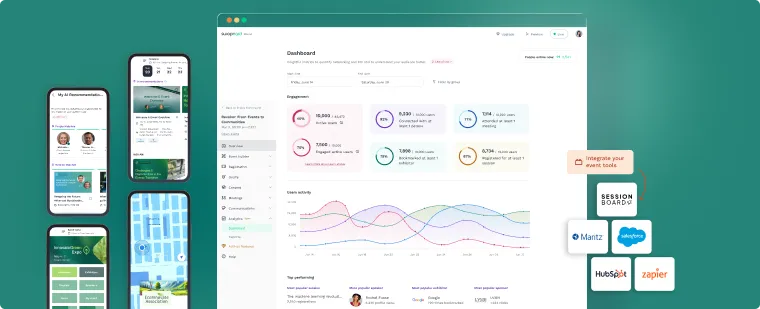
Swapcard is an AI-powered event engagement platform built to help organizers deliver personalized, data-driven experiences at scale. Designed for trade shows, conferences, and associations, it supports the entire event lifecycle—from registration and ticketing to mobile apps, onsite check-in, and post-event analytics.
Its AI-driven recommendations connect attendees, exhibitors, and sessions based on shared interests, while tools like custom registration workflows, lead capture, and ROI tracking help organizers and sponsors measure real impact. Ideal for organizers managing medium to large events. Swapcard helps boost engagement, simplify logistics, and deliver actionable insights—all within a single, integrated platform.
Schedule a live demo today.
Cvent
Pricing: Available upon request
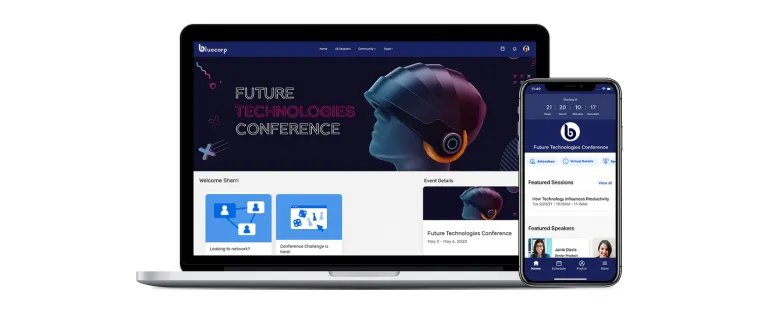
Cvent is one of the most established online event management software. It offers extensive tools for venue sourcing, registration, onsite management, and analytics. Its strong integrations with CRMs and marketing systems make it a top choice for corporate events.
Cvent is particularly suited for large corporations with complex approval processes and global events. While powerful, its interface and setup can feel heavy for smaller teams. It excels in logistics and compliance but is less focused on attendee engagement innovation.
See how Swapcard compares to Cvent
Bizzabo
Pricing: Starting from $17,999/year
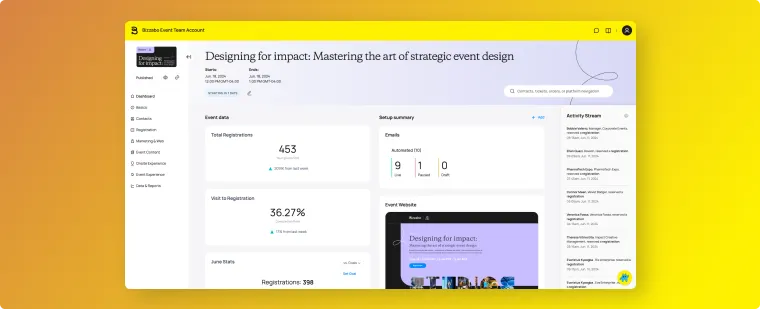
Bizzabo is a comprehensive event management and experience platform that enables organizations to plan, promote, and execute in-person, virtual, and hybrid events on a unified system. Its feature set spans registration and ticketing, agenda and session management, event marketing, attendee engagement tools, and real-time analytics and reporting, all designed to streamline the full event lifecycle.
While Bizzabo is feature-rich and robust for large-scale event operations, some users find customization options for event pages and designs limited, and the platform’s setup and configuration can be complex or less intuitive compared with simpler or more modular tools, particularly for teams without dedicated technical or event-tech expertise.
A2Z Events
Pricing: Available upon request
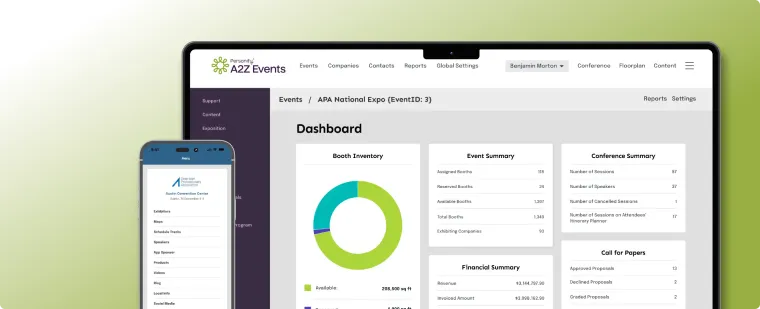
A2Z Events is a cloud-based event management platform designed to help professional organizers plan, run and grow tradeshows, conferences and other live or hybrid events. It offers an integrated suite of tools — from registration and floor-plan management to badge printing, mobile apps, attendee engagement and reporting — that centralizes workflows and boosts productivity for associations, nonprofits, corporate event teams and show planners.
However, certain administrative and reporting functions can feel less intuitive or cumbersome, especially on the backend where navigating multiple tabs or generating specific reports may require extra effort.
RingCentral Events (ex-Hopin)
Pricing: Available upon request
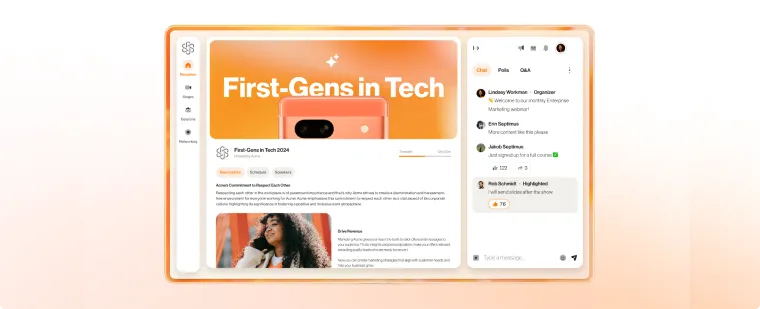
RingCentral Events (ex-Hopin) is an all-in-one online event management and virtual event platform designed to help organizations plan, host, and analyze virtual, hybrid, and in-person events on a single platform. It provides integrated tools for event registration and ticketing, custom branding, live streaming, and content delivery, as well as attendee engagement features such as chat, polls, Q&A, and networking sessions.
While strong for virtual formats, RingCentral Events can feel less mature for large-scale in-person or hybrid events. It is best suited for digital-first event strategies.
Whova
Pricing: Available upon request
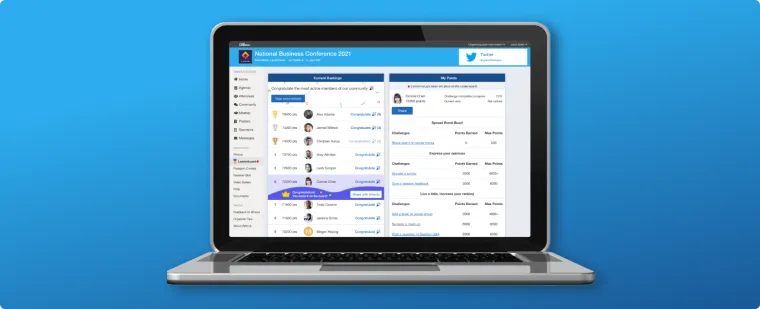
Whova is an all-in-one event management and engagement platform used to plan, promote, and execute in-person, hybrid, and virtual events from a single, cloud-based system. The platform provides tools for online registration and ticketing, agenda and session management, attendee networking and engagement, live polls, surveys and gamification, mobile event apps, QR check-in, plus real-time updates and analytics that help organizers streamline logistics and boost participant interaction.
While Whova is praised for its ease of use, networking features, and comprehensive feature set, some users find that its pricing can be difficult to budget for (quote-only pricing and add-ons can raise costs), and the breadth of features may create a learning curve for new organizers.
Eventify
Pricing: Starting from $99/month
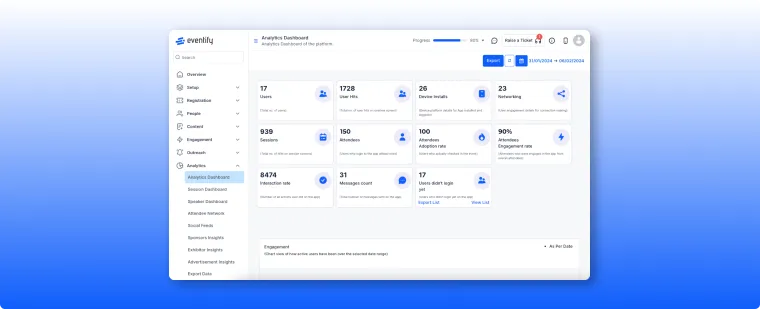
Eventify is an all-in-one event management platform designed to help organizers plan, promote, and execute in-person, virtual, and hybrid events. It offers tools for event creation and management, registration and ticketing, branded event apps with attendee engagement features like networking, chat, matchmaking, and analytics. The platform aims to simplify workflows and enhance attendee experiences by centralizing key event operations in a single interface.
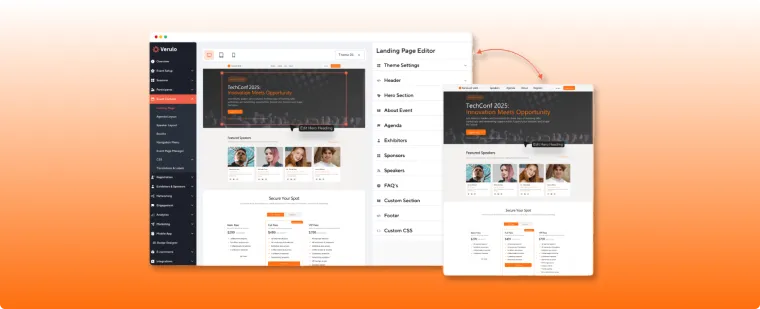
However, customization options for design and layout can be limited, which may restrict how effectively organizers can tailor event branding and page visuals. Some users also report minor email/communication issues and occasional challenges with attendee management at higher volumes.
vFairs
Pricing: Available upon request
vFairs is a versatile online event management system recognized for its immersive 3D-style environments and virtual booths, which make online experiences visually engaging. It also includes tools for registration, networking, webinars, and analytics to track attendee participation and ROI.
vFairs is a strong choice for trade shows, job fairs, and large virtual events that focus on connecting exhibitors and attendees across formats. However, its emphasis on 3D visuals and managed setups may make it less flexible for teams seeking a simpler, self-service experience.
EventZilla
Pricing: From $1.50 per registration
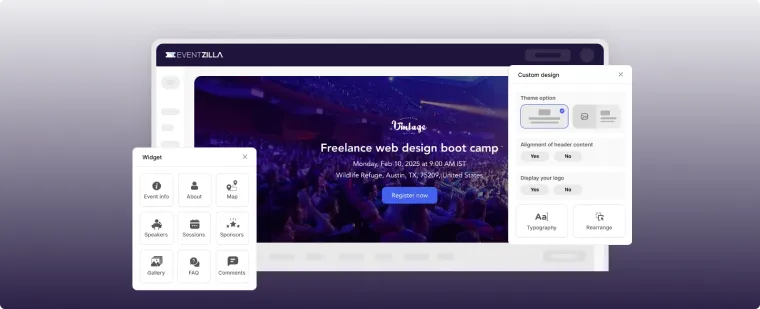
EventZilla is an event registration and ticketing platform designed for organizers running in-person, virtual, or hybrid events. It enables users to create event pages, sell tickets, manage registrations, and track attendance from a single interface. The platform is commonly used for conferences, workshops, training sessions, and community or professional events. EventZilla focuses on simplicity, speed of setup, and cost-effective event management.
A commonly cited drawback of EventZilla is its limited depth for complex or enterprise-level events. While it covers core needs well, advanced features such as highly customizable attendee journeys, sophisticated networking tools, or deep marketing automation and CRM integrations are more limited compared to higher-end event management platforms.
EventMobi
Pricing: Starting from $8,900/year
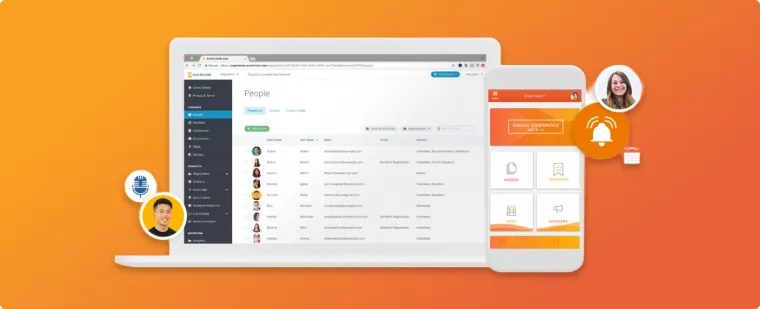
EventMobi is an event experience platform that helps organizations plan, manage, and deliver in-person, hybrid, and virtual events through a unified suite of tools. The platform offers registration and ticketing, custom event apps, interactive agendas, attendee engagement features like live polling and Q&A, as well as analytics and reporting. EventMobi is used for conferences, trade shows, corporate meetings, and association events where personalized attendee experiences and streamlined logistics are priorities.
However, EventMobi’s pricing and configuration complexity can be a barrier for smaller organizers - custom app features and advanced modules often come at higher price tiers - and the setup for larger, feature-rich experiences may require more time or support compared with simpler platforms.
Swoogo
Pricing: Starting from $11,800/year
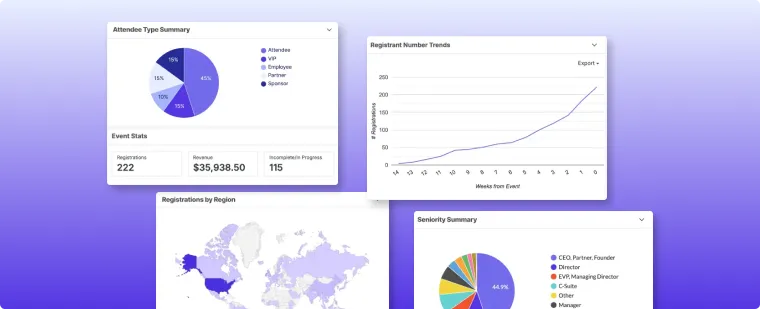
Swoogo is an event management and registration platform that helps organizers plan, promote, and execute in-person, virtual, and hybrid events. The platform provides tools for registration and ticketing, agenda and session management, custom branding, and integrations with marketing and CRM systems to streamline workflows and improve attendee experiences. Swoogo’s flexible architecture supports diverse event types, from conferences and seminars to workshops and association meetings, with an emphasis on automation and data flow across systems.
However, some users find Swoogo’s interface and feature set less intuitive initially, especially for first-time organizers or smaller teams. Additionally, certain advanced features - such as complex session configurations or deep customization - can require more setup time or technical support compared with simpler, more turnkey event platforms.
Brella
Pricing: Available upon request
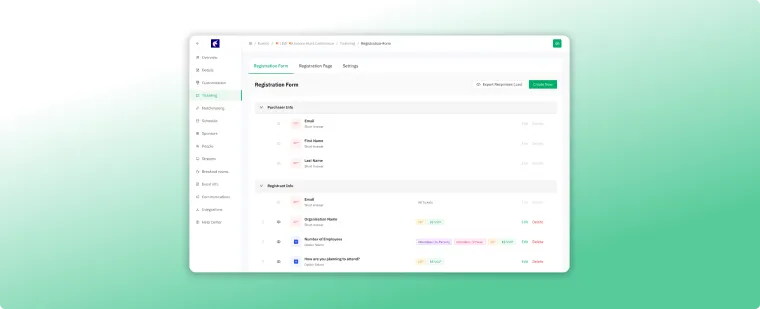
Brella is an event app and networking platform built around AI-powered matchmaking and 1:1 meeting booking, designed to help conferences and exhibitions drive more relevant connections between attendees, sponsors, and exhibitors. It’s mainly used by B2B event teams who care about structured networking outcomes (meeting volume and meeting quality), with features like intent-based matchmaking, scheduling, chat, and (for hybrid/virtual) video meetings.
However, Brella can feel narrower than full-suite event management tools: if you need deep end-to-end functionality beyond the event app and meetings layer, you may end up relying on other platforms for parts of registration, operations, or complex customization. There can also be limitations around customization or certain experience elements depending on use case.
Eventbase
Pricing: Available upon request
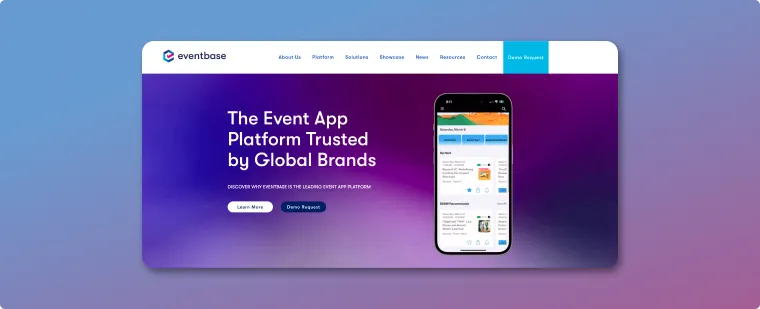
Eventbase is a premium mobile event app platform that helps large conferences, trade shows, and enterprise events deliver an on-brand attendee experience with features like schedules, maps/wayfinding, engagement, and integrations across the event tech stack. It is mainly for event teams and brands that need a white-label app that looks and feels like their own product, with strong design flexibility as a core advantage.
However, some users found that Brella could be somewhat expensive, which can make it harder to justify for smaller events or teams that don’t need a highly customized, enterprise-grade app experience.
Grip Events
Pricing: Available upon request
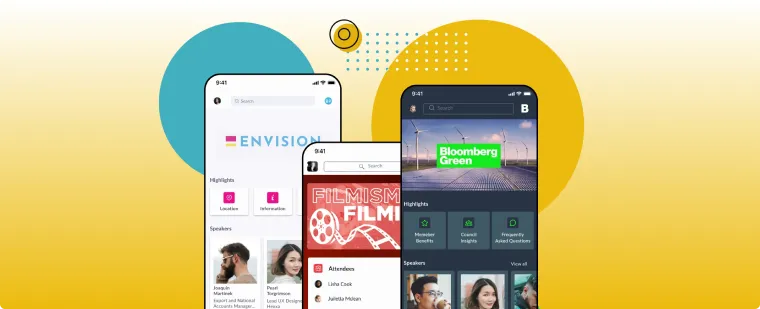
Grip Events is an AI-powered event platform focused on driving business relationships and measurable engagement, especially for large B2B conferences and trade shows. It is mainly built for commercial event organizers (and their exhibitors/sponsors) who want matchmaking, meeting booking, and an event app layer that can also plug into an existing event tech stack.
However, some users report design or element limitations that limit flexibility on the content/experience side and require workarounds, while others mention integration friction (i.e., getting internal systems to play perfectly with the app can take effort).
ExpoPlatform
G2 Ratings: 3.4/5 (4)
Pricing: Available upon request
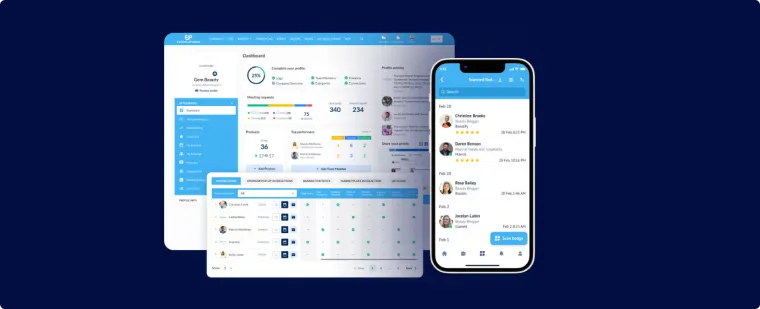
ExpoPlatform is a digital event and engagement platform designed to help organizers host in-person, virtual, and hybrid events with interactive experiences. It provides tools for event registration and ticketing, virtual and hybrid expo halls, networking and matchmaking features, live streaming, and analytics to measure engagement and ROI. The platform focuses on creating immersive exhibitor-driven environments that connect attendees, sponsors, and content in a single interface.
However, some users find the learning curve and setup complexity relatively high, particularly for fully custom virtual expo environments, and advanced feature configurations can require additional time or support compared with more straightforward event management solutions.
Which event management platform is right for you?
The best event management platform is the one that fits your needs, is reliable and easy to use, with features that are essential to your event model and strong security to protect yours and your stakeholders’ data.
To choose the right platform, you should also ask yourself the following questions:
- What type of events do you run? The software you choose must match the type of events you organize. If you run trade shows or sponsor-funded conferences, you need a top event management software that offers exhibitor tooling, lead retrieval, meeting scheduling, and sponsor reporting. If you run consumer paid-entry events, a platform with strong ticketing distribution and payment simplicity matters more.
- How important is attendee engagement and networking to your value proposition? If attendees come for content, prioritize event software that offers live participation, session feedback, and content access. If attendees come for networking opportunities, prioritize a system with strong matchmaking, meeting scheduling, and profile depth.
- Do sponsors and exhibitors require measurable ROI? Sponsor ROI must be measurable without heavy manual reporting. The best event management software for sponsor-led events offers booth visits, lead capture metrics, meetings booked, and engagement per sponsor asset (such as session sponsorship, banners, push notifications).
- What are your operational constraints on site? If onsite throughput is a risk (big audience, tight arrival windows), prioritize event solutions that push check-in speed, badge printing reliability, and offline readiness.
- What are your integration needs (CRM, marketing automation, SSO, analytics)? Integration complexity is the hidden cost of event software. If you must synchronize to a CRM, automate lifecycle campaigns, or maintain clean attribution, choose an event platform designed for easy integration and data governance.
Conclusion: Why the best event software is key to event performance
The best event management software provides the structure needed to deliver events efficiently and consistently. As they centralize operations, automate key workflows, and connect all event stakeholders within one platform, they reduce operational risk and ensure a smoother experience for all.
If you want to ensure smooth execution while managing every stakeholder, choose Swapcard, the go-to solution for event professionals, supporting every stage of your event and driving more successful and profitable outcomes.
Frequently asked questions
What makes a platform the best event management software?
The best event management software is the platform that matches your event format, revenue model, and operational needs while delivering measurable outcomes. In practice, this means: reliable registration and check-in, strong attendee experience, networking, engagement tools aligned with your goals, sponsor/exhibitor capabilities, and analytics that turn event activity into decisions for the next edition.
Is event management software relevant for small events?
Yes, as small events still suffer from the same issues as large events, notably, manual errors, poor communication, and unclear outcomes. A top event management software offers automation, centralized attendee data, stronger sponsor ROI, and better experience overall, without requiring an enterprise-level setup.
What features should I prioritize when comparing event software?
Consider the features that directly impact your event’s success metrics. For instance, if revenue comes from ticket sales, prioritize ticketing, payments, and conversion. If value comes from networking, prioritize matchmaking and meeting scheduling. If sponsors fund the event, include exhibitor tools, lead retrieval, and sponsor reporting.
What is the typical pricing model for the best event planning software?
Event planning software pricing usually depends on your event size and the modules you use. Many platforms use annual licensing combined with volume-based pricing tied to attendee and exhibitor counts, while some platforms use per-ticket fees or tiered plans with add-ons. Find out the pricing model of the systems you are interested in and compare it with your needs and budget.
How do I choose between two event management platforms that seem similar?
Choose the platform according to its fit with your events’ needs. Start with your must-have use cases (event type, scale, on-site vs virtual). Compare real workflows, integrations, and reporting depth. Evaluate total costs including add-ons and support. Test both with a small pilot. The best event management platform is the one your team can run reliably, end-to-end, with minimal friction.

Jessica Duarte
Product Marketing Manager | Swapcard
Shapes product marketing and go-to-market strategy at Swapcard, drawing on a background in event technology consulting and cross-functional digital marketing leadership.



.webp)

Join 12,000 subscribers and unlock industry secrets.
By submitting this form, you agree to receive periodic emails on insightful content related to events and our product, and in accordance with our Privacy Policy. You can, of course, change your preferences or unsubscribe at any time.


.svg)

.svg)
