


Trade Show Marketing: Turn Trade Shows into Business Opportunities
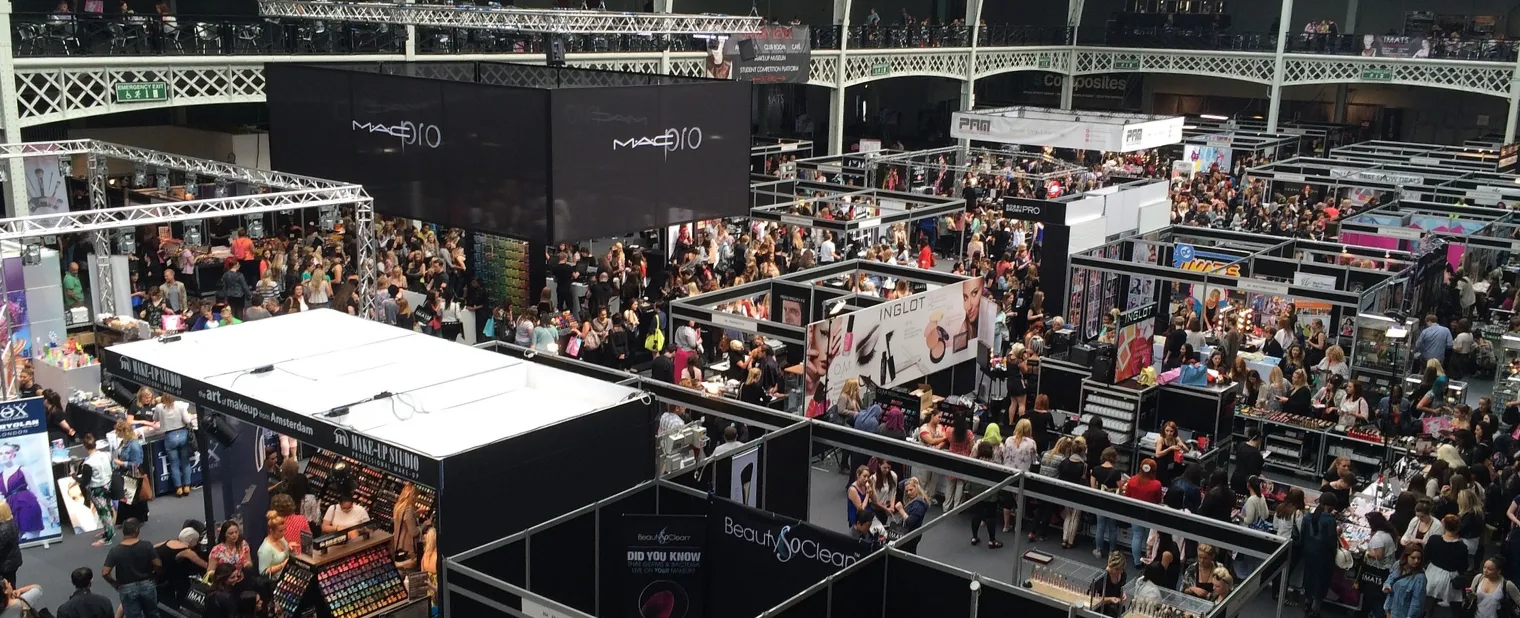
Trade show marketing is a crucial strategy for exhibitors, focused on generating measurable business outcomes. A branch of event marketing, it enables exhibitors to turn their trade show participation into ROI—structuring every step before, during, and after the event to attract the right visitors, engage them onsite, qualify prospects, and convert follow-ups into pipeline and revenue.
A strong trade show marketing strategy gives exhibitors clarity and control, ensuring that every interaction turns into a qualified lead and every event investment becomes a growth opportunity. This guide explains what trade show marketing is, why it matters, how to build a step-by-step strategy, and which KPIs to track to measure real ROI and improve trade show performance.
- Trade Show Marketing Takeaways
- What Is Trade Show Marketing?
- Why Does Trade Show Marketing Matter in B2B?
- What Is the Main Objective of Trade Show Marketing?
- What Are the Benefits of Having a Trade Show Marketing Strategy?
- How To Build an Effective Trade Show Marketing Strategy
- The 3 Stages of a Trade Show Marketing Strategy
- What Are the KPIs You Should Track After a Trade Show?
- What Is the Future of Trade Show Marketing?
- Examples of Successful Trade Show Marketing
- Conclusion: Trade Show Marketing Turns Events into Revenue
- FAQs
Trade Show Marketing Takeaways
- Trade show marketing is the strategy that structures every step before, during, and after the event to generate measurable revenue, not just visibility.
- A high-performing strategy brings method and predictability to the trade show experience.
- Platforms like Swapcard integrate lead capture, meeting scheduling, networking, qualification, and analytics into one solution, enabling exhibitors to track performance across the entire trade show lifecycle and prove ROI.
What Is Trade Show Marketing?
Trade show marketing is a strategic approach that ensures exhibitors achieve measurable business results from their trade show presence. It aligns all pre-event, onsite, and post-event actions with commercial goals.
During in-person events, trade show marketing drives targeted booth traffic and facilitates face-to-face engagement. In hybrid formats, it synchronizes physical and digital touchpoints, including sessions, demos, networking, and follow-up.
Why Does Trade Show Marketing Matter in B2B?
In B2B events, trade show marketing creates purpose at every stage of the experience. Trade shows bring together buyers, decision-makers, and partners with active needs and defined budgets. A structured trade show marketing strategy ensures:
- Pre-event preparation that attracts qualified meetings
- Onsite efforts focused on high-value prospects
- Post-show actions that maintain momentum and convert leads
This is why top B2B organizations treat trade shows not as visibility exercises, but as revenue engines that require planning, coordination, and measurable outcomes. With a consistent trade show marketing strategy, a single event can deliver the same commercial impact as months of outbound outreach.
What Is the Main Objective of Trade Show Marketing?
The goal of trade show marketing is to give structure, direction, and commercial intent to an exhibitor's participation. It defines:
- Which prospects to target
- What message to communicate
- What conversations qualify as opportunities
- What next steps convert interest into pipeline
Trade show marketing aligns sales and marketing on a shared goal: revenue generation. It helps avoid unproductive booth conversations and ensures teams focus on prospects who meet real buying criteria. Instead of collecting business cards without direction, the exhibitor’s team knows what to look for and how to move each discussion forward.
What Are the Benefits of Having a Trade Show Marketing Strategy?
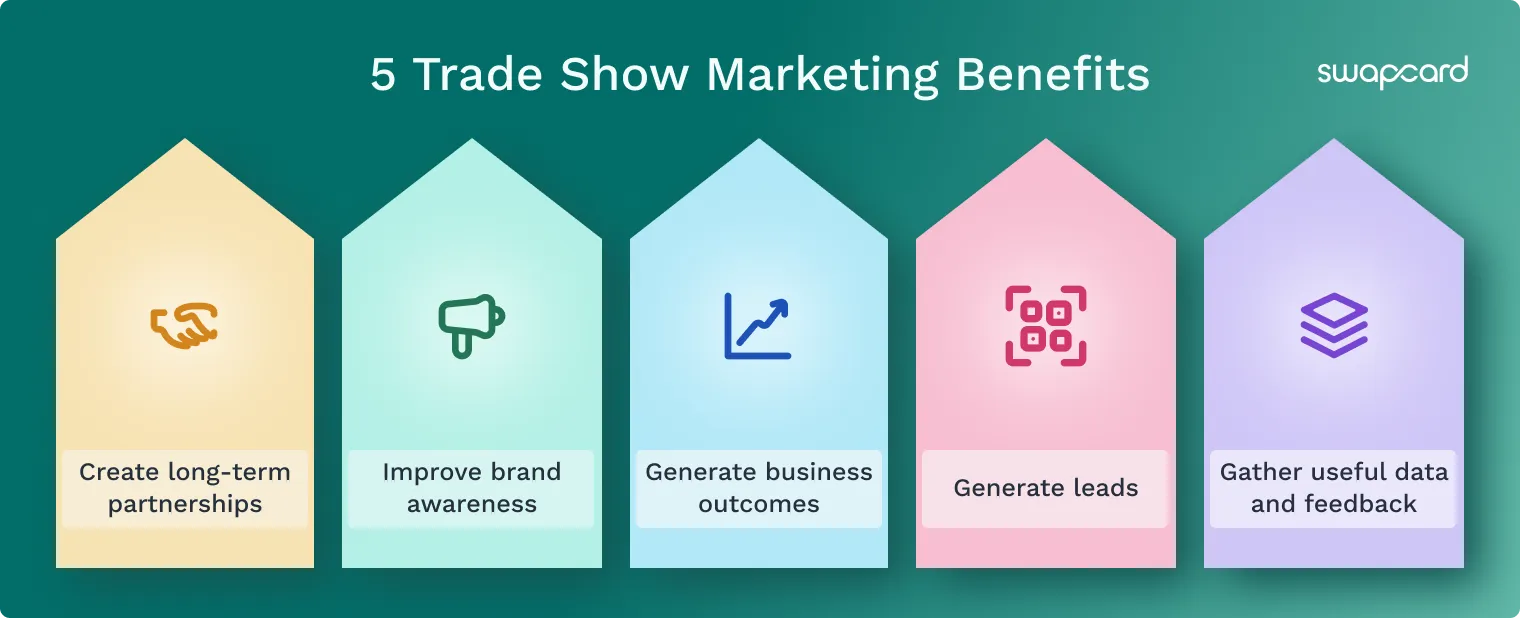
A well-defined trade show marketing strategy brings structure and intent to your event presence. It clarifies who to engage, what messages to prioritize, and how to convert booth interactions into measurable outcomes. Rather than relying on visibility alone, it helps your team drive qualified pipeline, accelerates sales conversations, and builds partnerships that last beyond the show floor.
Here’s how a strong strategy unlocks results:
- Drive qualified booth traffic
- Build long-term partnerships
- Align marketing and sales around shared objectives
- Capture and qualify leads efficiently
- Accelerate follow-up to convert interest
- Converts interest into post-event opportunities and revenue
Drive Qualified Booth Traffic
A clear trade show marketing strategy attracts the right people to your booth by helping target ideal customer profiles or active opportunities before the event. Your team spends less time on general inquiries and more time engaging with prospects who have a real use case, a budget, and a decision-making timeline.
Build Long-Term Partnerships
A well-defined trade show strategy helps identify and engage with potential partners like resellers, distributors, technology providers, or industry associations. It should also include relationship-building activities beyond the booth. Organize meetings during roundtables, speaker sessions, or networking events where collaboration can begin in a more strategic setting. A structured approach increases your chances of forming high-value business alliances that extend beyond the show floor.
Align Marketing and Sales Around Shared Objectives
Trade show performance improves when marketing and sales teams work toward the same outcomes. A strong strategy defines target personas, qualification criteria, and key messages, ensuring every team member at the booth asks consistent questions, delivers the same value proposition, and agrees on next steps.
Capture and Qualify Leads Efficiently
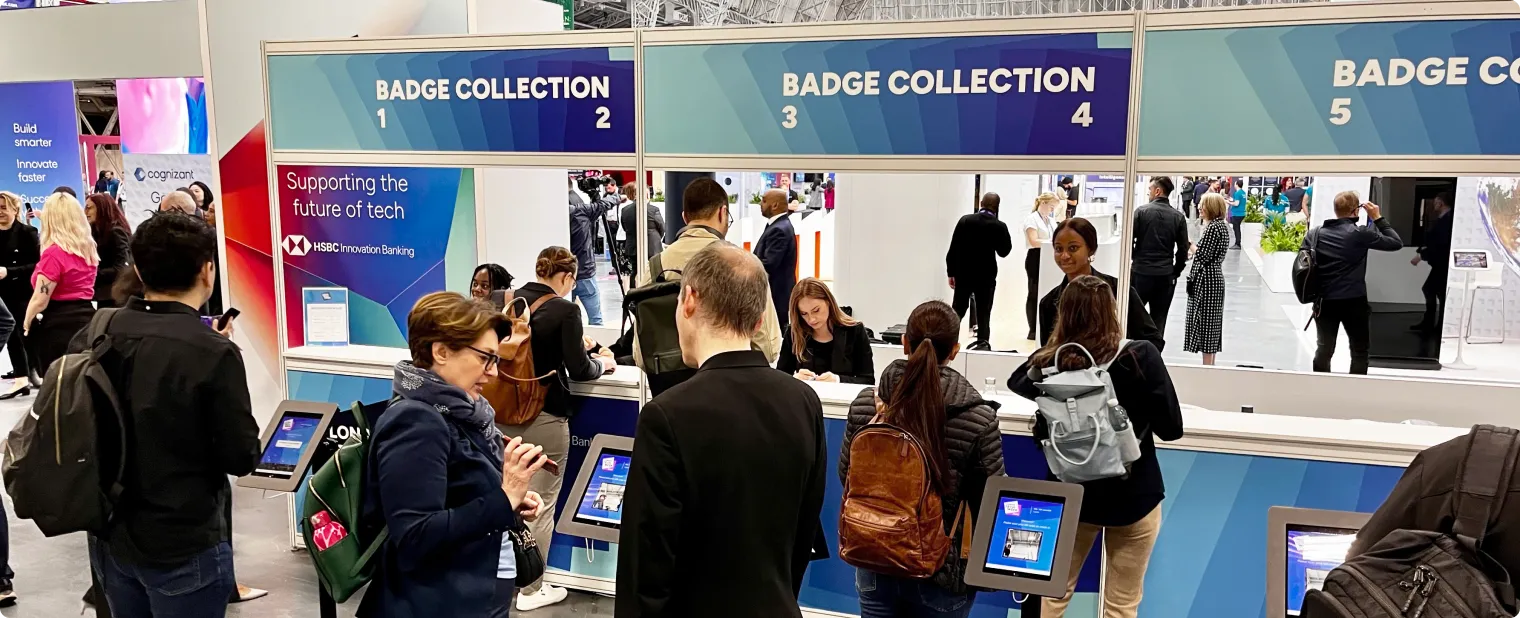
A clear process helps onsite teams capture leads and collect the right data. Instead of ad-hoc lead capture or unstructured notes, equip your team with a unified process. Use badge scanners or lead capture apps to record each interaction, qualify interest, and tag key data points (problem, budget, decision-maker). This structure enables faster post-show prioritization.
Accelerate Follow-Up to Convert Interest
Trade shows only drive ROI when follow-up is fast, relevant, and aligned with buyer intent. Assign each lead to the right team member, based on their stage:
- High-intent prospects → receive demos or meetings within days
- Early-stage leads → get relevant case studies or educational content
Timely follow-up prevents competitor interference and maintains momentum.
Convert Interest into Post-Event Opportunities and Revenue
Interest shown at the booth only matters if it leads to a clear next step. A structured trade show marketing process ensures that all promising conversations are routed to the right team member, with actions that reflect the buyer’s needs:
- A scheduled demo
- A pricing proposal
- A technical deep dive
- A discovery call with a specialist
Each lead should be assigned immediately, with progress tracked throughout the sales cycle. This continuity prevents promising conversations from ending once the event wraps up and preserves the momentum created during the trade show, turning one-time engagement into measurable results.
How To Build an Effective Trade Show Marketing Strategy
Trade show marketing starts long before the event and is built around four foundational elements:
- Set clear goals
- Define your target audience
- Determine expected ROI and budget
- Prepare engaging trade show marketing materials
1. Set Clear Goals
A successful trade show begins with well-defined goals that justify the investment and guide your team’s efforts. These goals might include:
- Generating sales opportunities
- Securing partner discussions
- Launching new products
- Meeting with customers
- Boosting brand visibility
Establishing clear objectives ensures alignment with your broader marketing strategy and avoids reactive behavior onsite. When teams understand the purpose of the trade show, they can approach the right visitors with confidence, ask meaningful questions, and secure next steps that move prospects forward. With clarity, exhibitors turn a passive presence at the trade show into a focused, results-driven initiative.
2. Define Your Target Audience
Trade show performance improves significantly when exhibitors know exactly who they want to meet. To define the right audience, describe your ideal visitor in concrete terms: job title, industry, company size, country, and budget range. The more specific the profile, the easier it is to identify high-value prospects at the booth and avoid conversations that won’t lead to business.
Once exhibitors know their target, they must:
- Contact them before the event
- Send personal invitations to top accounts
- Clearly communicate the value of a meeting
When prospects arrive already informed about your business and offer, booth conversations become more productive and far more likely to lead to qualified opportunities.
3. Determine Expected ROI and Budget
Exhibitors must clearly define what trade show success looks like before allocating budget. Depending on your ROI goals, success may be measured by:
- The number of meetings booked
- The number of opportunities created
- The number of deals accelerated or partners sourced
Once success is defined, build your trade show budget around these desired outcomes rather than around visuals or booth size. Every expense should support pipeline creation or relationship building. If a cost does not contribute to measurable results, it may not be essential.
To measure event ROI, track both quantitative and qualitative outcomes:
- Direct/Quantitative ROI: Leads captured, deals closed, and direct revenue.
- Indirect/Qualitative ROI: Brand awareness, partner relationships, customer insights, and competitor benchmarks.
This combined view helps you assess cost-effectiveness and fine-tune future trade show investments..
4. Prepare Engaging Trade Show Marketing Materials
Your trade show marketing materials should instantly communicate who you are, what you offer, and how your solution applies to your audience. The goal is to reinforce your message visually and verbally, even from across the trade show floor. Every asset should feel cohesive and reflect your brand identity. Key materials include:
- Banner displays: Your first visual impression. These should clearly highlight your value proposition and the problems you solve.
- Branded table covers: Create a clean, polished look that shows professionalism and intentional booth design.
- Trade show giveaways: Useful branded items extend your visibility after the event and help attendees remember your solution.
- Digital business cards: Use QR codes to exchange contact information instantly and eliminate the risk of lost or mismanaged business cards.
- Product samples and live demos: Let attendees explore your product in real time. Use cases and “before/after” demos make your offer tangible and memorable.
The 3 Stages of a Trade Show Marketing Strategy
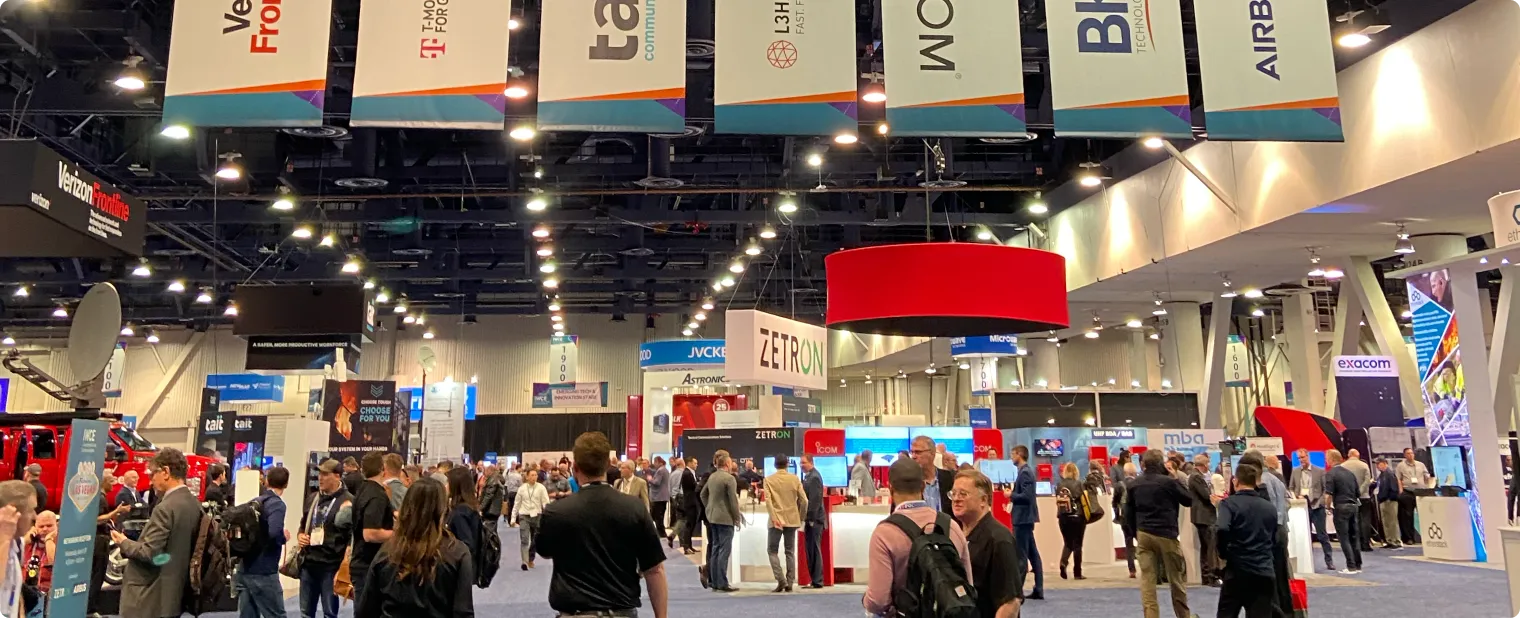
A high-performing trade show marketing strategy follows three distinct stages:
- Preparation before the event
- Execution during the event
- Follow-up after the event
Each stage plays a crucial role in turning event visibility into measurable business outcomes.
Before the Event: Pre-Trade Show Marketing Strategy
Similar to event management, the pre-show phase lays the foundation for trade show success. Its goal is to generate interest and drive qualified booth traffic before the doors even open. To build early momentum, use these proven channels:
- Direct mail: Personalized outreach, especially when paired with a clear incentive to visit the booth, can drive high-value prospects into your meeting agenda. Include a strong call to action like a QR code to book a meeting, a VIP pass, or early access to a demo.
- Social media: Share countdowns, behind-the-scenes content, and teaser posts featuring trade show marketing materials across social media platforms. This builds anticipation and makes your audience feel involved before they arrive.
- Sponsored placements and industry publications: Sponsored placements and targeted ads on event platforms and trade publications boost visibility with the right audience and reinforce your messaging across multiple channels. These placements are especially effective when paired with a clear call to action—such as booking a demo, joining a micro-event at the booth, or attending a product reveal.
During the Event: Onsite Trade Show Marketing Strategy
The onsite phase focuses on booth performance and how to turn interest into qualified opportunities. Onsite teams must combine three components: attract the right visitors, conduct meaningful, high-value conversations, and capture data in real time.
Real-time lead capture via badge scanning or a lead retrieval app ensures no valuable context is lost. Leads are immediately routed into the exhibitor’s CRM, allowing for fast prioritization, quick qualification, and productive sales conversations with high-intent prospects at the booth.
After the Event: Post-Trade Show Marketing Strategy
The post-show stage determines whether all that booth activity becomes pipeline and revenue. The goal is to ensure every conversation leads to the right next step with tailored follow-up:
- High-intent prospects who request pricing, a demo, or a project discussion should go directly to the sales team. These prospects are already evaluating solutions and need timely responses to compare options. Any delay risks losing momentum or letting competitors respond first.
- Early-stage leads should not receive a sales pitch too soon. Instead, nurture them with relevant content—such as case studies, product explanations, or educational content — that helps them understand how your solution can support their needs in the future.
To support this process, every lead must be entered into your CRM with full context:
- Notes on the conversation
- Prospect’s challenge
- Prospect’s timeline and the agreed next step
When this information is visible and centralized, sales and marketing can track progress, understand which leads have converted, turn trade show content into marketing assets, and apply insights to improve future event performance.
To put it simply, coordinating pre-show, onsite, and post-show actions is the key to turning trade show participation into a successful event.
What Are the KPIs You Should Track After a Trade Show?
To evaluate whether your trade show presence delivered real business impact, or to identify areas for improvement, monitor the following Key Performance Indicators (KPIs):
- Time to follow-up: Measures how quickly leads are contacted after the event.
- Meeting booked rate: The percentage of qualified leads who schedule a next step (such as a demo, discovery call, or presentation). This indicates whether booth conversations translate into sales opportunities.
- Opportunity creation rate: The number of trade show leads that enter the sales pipeline.
- Conversion rate: The percentage of booth conversations that turn into pipeline. This KPI helps assess the quality of leads and the effectiveness of your onsite qualification process.
- Pipeline value generated: The total potential revenue tied to opportunities created from the event.
- Closed-won revenue: Revenue from deals that originated at the trade show. This is the most direct and reliable method for measuring long-term ROI.
- ROI ratio (revenue vs. investment): Compares money earned to money spent. This KPI determines whether the event was profitable and helps guide future participation decisions.
- Performance by persona, industry, or segment: Reveals which target profiles converted best, helping refine your targeting, messaging, and trade show selection strategy.
What Is the Future of Trade Show Marketing?
The trade show industry is expected to continue growing through 2026 and beyond, as future events will continue to play a critical role in helping businesses compare solutions, build trust, and accelerate deals through face-to-face interaction. However, as trade shows often represent a significant investment, trade show organizers and exhibitors must demonstrate tangible business outcomes to justify the cost.
Exhibitors and trade show organizers will increasingly rely on data to prove ROI. Tools like lead capture, CRM integrations, and engagement analytics will become standard, as stakeholders demand clear proof of ROI before approving future budgets.
Technology and sustainability will also shape the evolution of trade shows. In-person events will remain essential, while digital platforms will take on a greater role in creating and tracking business opportunities. For example, platforms like Swapcard, which integrate attendee data, lead capture, matchmaking, meeting scheduling, and post-show follow-up, show how digital innovation can simplify ROI tracking across the entire event lifecycle.
Examples of Successful Trade Show Marketing
Some brands stand out at trade shows because they design attendee experiences that go beyond basic product exposure. One strong example is GL Events’ GreenTech+, which illustrates what high-performance trade show marketing looks like in action.
Conclusion: Trade Show Marketing Turns Events into Revenue
Trade show marketing is the framework that turns an exhibitor’s presence into measurable business outcomes. When goals are clear, the right audience is defined, and each stage is strategically executed, trade shows shift from visibility exercises to revenue-generating opportunities. A strong strategy guides who to engage, what message to deliver, how to qualify interest, and which next steps to take, ensuring every booth interaction contributes to pipeline growth and ROI.
Ready to turn trade shows into predictable growth drivers? Swapcard is the leading event management solution built for exhibitors to execute high-impact trade show marketing strategies. From registration and meetings to lead capture and analytics, Swapcard brings every step together in a single, integrated platform. Your teams stay aligned in real time, follow-ups are personalized and timely, and ROI becomes visible at every stage of the event lifecycle. Schedule a live demo today and discover how Swapcard can turn your next trade show into a repeatable revenue engine.
Frequently asked questions about trade show marketing
How early should trade show marketing preparations begin?
Ideally, you should begin preparing your trade show marketing strategy three to six months before the event. This gives you time to:
- Identify high-priority target accounts
- Launch meeting-booking campaigns
- Develop marketing and booth materials
- Align sales and marketing on messaging and qualification criteria
What is the most common reason trade shows fail to generate ROI?
The main reason trade shows fail to deliver ROI is the lack of post-show follow-up. Even with strong interest at the trade show booth, leads often go cold without timely, relevant outreach. Each lead should receive a next step that matches their level of interest, whether it's a demo, pricing proposal, or educational content.
How many leads indicate strong trade show performance?
Lead volume alone is not an indicator of performance. What matters most is the number of leads that match your ideal customer profile (ICP) and move into qualified opportunities. In short, quality over quantity—strong trade show performance means generating sales-ready leads, not just contact lists.
What is the best way to ensure follow-up converts into revenue?
Follow up within 48 hours, reference the booth conversation, and propose a next step that aligns with the buyer’s needs (product demo, pricing discussion, technical call, or relevant content). Fast, personalized follow-up keeps momentum strong and prevents competitors from stepping in.

Irene Montes
Growth Marketer
Drives demand generation and lifecycle campaigns at Swapcard, using data-driven experimentation to grow audience engagement and pipeline for the event platform.


.webp)

Join 12,000 subscribers and unlock industry secrets.
By submitting this form, you agree to receive periodic emails on insightful content related to events and our product, and in accordance with our Privacy Policy. You can, of course, change your preferences or unsubscribe at any time.
.svg)


.svg)
.svg)
.svg)
.svg)


