


The 11 Best Event Registration Platforms in 2026: Find the Right Solution for Your Events
Choosing the right event registration platform is not just a technical decision. It directly impacts revenue, attendee satisfaction, and the quality of data you collect for future editions.
Registration is your event’s first real touchpoint. It shapes your attendees’ first impression, determines how smoothly your onsite operations run, and influences how effectively you can personalize the experience once they arrive.
Whether you are organizing a B2B conference, trade show, association event, or corporate summit, the right event registration platform should support you from the first ticket sale to final check-in — while feeding clean, actionable data into the rest of your event ecosystem.
In this guide, we compare eleven of the best event registration platforms in 2026 and break down what truly matters when choosing the right solution for your event.
- Event Registration Platforms Takeaway
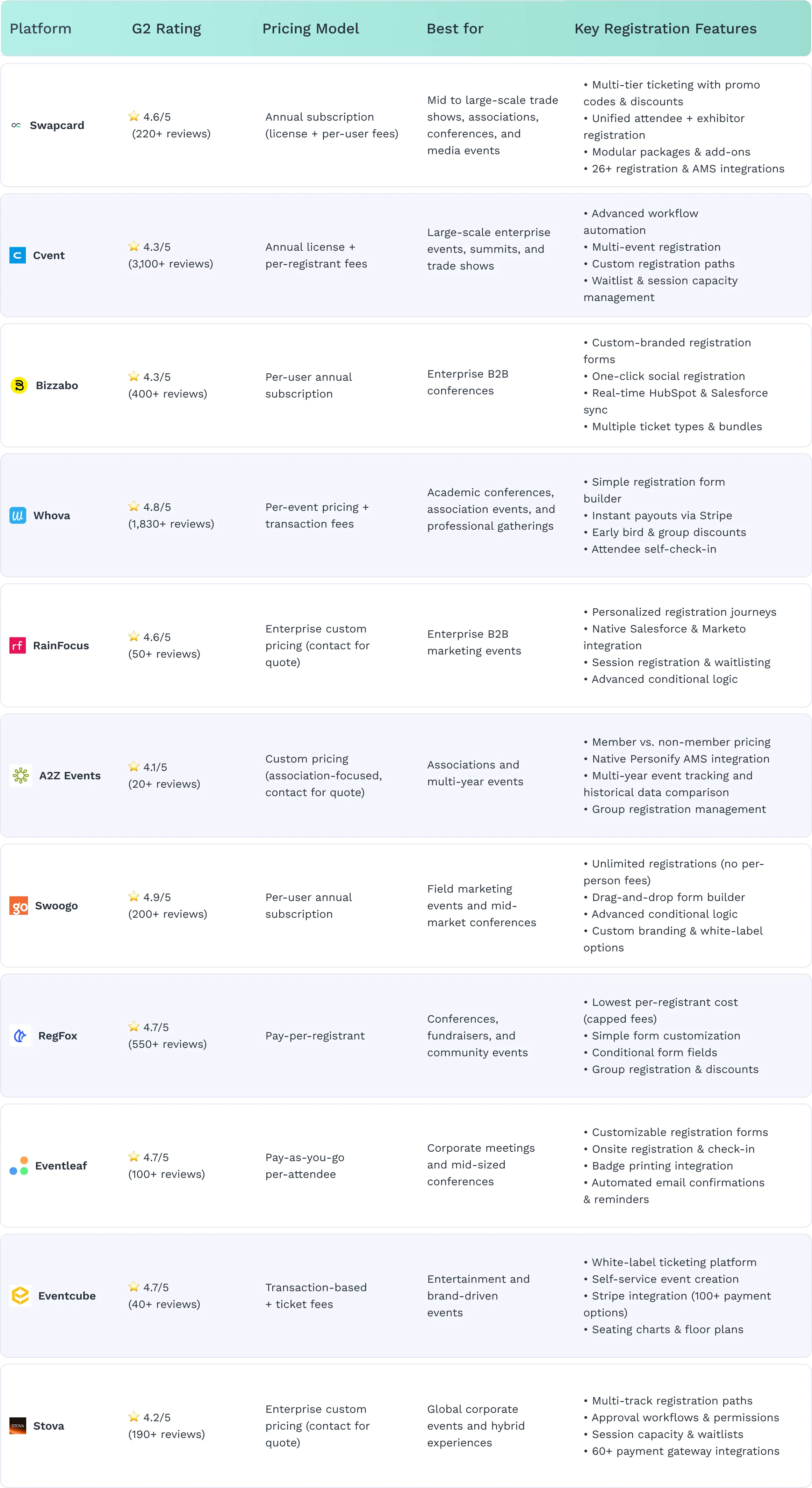
- A Quick Ranking of the Best Event Registration Platforms
- What Is an Event Registration Platform?
- Why Does Using an Event Registration Platform Matter?
- Who Should Use Event Registration Platforms?
- What Are the Must-Have Features of An Event Registration Platform?
- The 11 Best Event Registration Platforms
- What Is Changing in the Events Registration Industry?
- Conclusion: Sell More Tickets and Drive Attendance with the Best Event Registration Platform
- Frequently Asked Questions About Event Registration Platforms

Event Registration Platforms Takeaway
- Event registration platforms help event organizers manage sign-ups, payments, communications, check-in, and post-event reporting from one system.
- The right event registration platform depends on your event type, size, budget, and the level of customization you require.
- Integrations with your CRM and marketing tools are often critical for professional event teams.
- Hybrid support, personalization, and automation are now standard expectations.
- Swapcard’s event registration software helps you automate ticket sales, create customized registration paths, and ensure smooth transactions with integrated payment options.
A Quick Ranking of the 11 Best Event Registration Platforms
What Is an Event Registration Platform?
An event registration platform is a centralized solution that allows organizers to collect registrations, process payments, manage attendee data, and handle onsite check-in.
It replaces manual spreadsheets and disconnected tools with one structured system that scales. Whether you are hosting a 100-attendee workshop or a 20,000-attendee trade show, the right online event registration platform helps you efficiently manage multiple ticket types, attendee categories, and payment workflows.
More importantly, it turns registration data into usable insights that support personalization, engagement, and post-event reporting.
Why Does Using an Event Registration Platform Matter?
Online registration is the first real touchpoint between you and your attendees. Before anyone sets foot in the event venue, they have already formed an impression based on how smooth or frustrating the sign-up process was. A registration form that is too long, unclear, or poorly optimized for mobile can lead to drop-off before a single ticket is sold.
Using an event registration platform helps ensure a positive first impression and minimal friction throughout the registration journey. Instead of relying on manual processes or disconnected tools, event organizers can centralize registration, payments, and communications in a single system. This turns what could be a complicated registration process into a seamless experience that benefits both attendees and organizers.
For event organizers, a modern registration platform provides the features needed to plan, organize, and execute events efficiently. It helps:
- Streamline the event management process and reduce administrative burden
- Save time with automation, including ticket sales and payment processing
- Simplify attendee check-in and onsite operations
- Customize registration flows based on attendee type
- Improve communication with attendees before and after the event
- Collect relevant attendee data and generate actionable analysis
Beyond operational efficiency, an event registration platform also provides organizers with better visibility into registration performance, enabling them to track ticket sales trends, monitor attendance projections, and make informed decisions throughout the event lifecycle.

Who Should Use Event Registration Platforms?
Event registration platforms are designed for organizations that manage events requiring structured attendee registration, payment processing, and participant data management. Whether you are running a conference, trade show, or corporate event, using an event registration platform centralizes data and streamlines operations.
They are particularly valuable for:
- Associations organizing conferences
- Trade show organizers managing exhibitors and sponsors
- Professional event planners coordinating large-scale gatherings
Associations: Member Verification and Tiered Pricing
Associations and professional organizations often structure their events around membership benefits, which creates specific registration challenges. Organizers typically offer discounted rates to members, students, or early-career professionals, but they must also ensure that only eligible participants can access them. Associations also rely heavily on registration data to segment attendees by membership category, professional specialty, or committee participation.
An effective event registration platform should therefore support tiered pricing, conditional logic in registration forms, and membership verification mechanisms. Attendees should be able to select their membership status, enter a member ID if required, and automatically receive the appropriate pricing and relevant form fields. Platforms that integrate directly with Association Management Systems (AMS) such as MemberSuite, iMIS, or YourMembership provide an additional advantage by validating membership status in real time.
Example: A medical association runs an annual congress with 5,000 attendees. Members receive 40% off registration, but the association needs to verify status to prevent non-members from claiming the discount. Their registration software uses conditional logic: attendees select ‘'member'’ and enter a member ID, which automatically triggers member pricing and member-only registration questions.
Trade Shows: Multiple Audiences and Complex Workflows
Trade shows involve multiple participant categories with distinct operational needs, making registration more demanding than standard ticketing. Organizers must simultaneously manage attendees purchasing tickets, exhibitors selecting booths and registering staff, sponsors choosing visibility packages, and speakers submitting session details. Handling these workflows manually often results in fragmented processes, duplicated data, and an increased administrative workload.
An event registration platform should support separate registration flows for each participant type while keeping all data within a single centralized system. Exhibitors should be able to select booth packages, manage invoices, and assign staff badges within a single company account. Speakers can submit abstracts and upload bios or headshots, while sponsors can choose sponsorship tiers that define their visibility and benefits.
Example: A B2B trade show with 20,000 attendees and 500 exhibiting companies requires separate registration flows. Attendees purchase standard tickets, exhibitors select booth packages and register staff members, sponsors choose visibility tiers, and speakers submit session information. By centralizing these registration paths, organizers reduce operational friction and maintain clean, structured data across all participant categories.
Corporate Events: Custom Workflows and VIP Management
Corporate events often require highly controlled registration processes, especially when the audience includes employees, customers, partners, and executive guests. Companies frequently need to manage invitation-only access, internal approval workflows, or group registrations for departments and partner organizations. Certain attendees, such as strategic customers or executives, may require dedicated VIP registration paths and exclusive access.
To support these needs, event registration platforms should allow organizers to create custom registration workflows, private registration links, and approval processes. Invitation codes or gated registration pages ensure that only invited participants can register, while approval workflows allow organizers to validate attendance requests before confirmation. Integration with corporate systems, such as Single Sign-On (SSO), can further simplify employee registration by automatically populating user information.
Example: A global tech company hosts a three-day customer summit for 1,500 attendees. VIP customers receive a private registration link with expedited check-in. Partners register in groups with consolidated payment. Employees use SSO to auto-populate registration fields. The entire process is managed through one centralized event registration platform.
What Are the Must-Have Features of An Event Registration Platform?
Event registration platforms vary significantly in scope and capabilities. Some focus only on basic ticketing and payment processing, while others go far beyond the registration form, offering tools that support attendee engagement, onsite operations, and post-event reporting. When evaluating the best event registration platform for your event, these eight features genuinely make a difference.
Customizable Registration Forms
Customizable registration forms are essential in a modern registration platform, as one form does not fit every event format. For example, a trade show requires separate registration paths for exhibitors and attendees, while international events often require multilingual support.
The best event registration platform should allow organizers to create registration forms with custom fields, conditional logic, and multi-language capabilities. This ensures that each attendee sees only the questions and ticket options relevant to them, reducing friction during the registration process and improving completion rates.
Flexible Ticketing and Pricing
Pricing flexibility plays a direct role in driving ticket sales and increasing conversions. Early bird pricing creates urgency, promo codes reward loyal attendees, and group discounts encourage team registrations.
Your online event registration platform should support multiple ticket types, including VIP tickets, member pricing, early-bird rates, and tiered pricing. Access codes and conditional pricing should be easily configurable and displayed clearly on the registration page.
These ticket types must also be manageable through customizable event pages without requiring manual workarounds or third-party tools.
Secure Payment Processing
Payment friction can significantly impact registration completion rates. Whether you are selling paid event tickets or managing free sign-ups, attendees expect a secure, fast, and trustworthy checkout experience.
Look for integrated payment processing that supports multiple gateways such as Stripe or PayPal, multi-currency transactions, VAT handling, corporate invoicing, and straightforward refund management. A complicated or unreliable checkout experience is often the final step before a potential attendee abandons the registration process.
Integrated Onsite Check-In and Badge Printing
Long check-in queues can negatively impact the attendee experience before the event even begins. A strong registration platform should include integrated, onsite check-in tools such as QR code scanning via mobile devices, self-service kiosks, on-demand badge printing, and real-time attendance tracking.
Ideally, these onsite solutions operate within the same event registration platform used to collect registrations, eliminating the need for manual data imports or system syncing.
Session Access Control and Attendance Tracking
Managing session access manually can create operational challenges, particularly for VIP sessions, sponsor-only areas, or capacity-limited workshops.
An effective event registration platform should allow organizers to assign session access permissions based on ticket type or badge category. It should also support real-time attendance tracking and automated room capacity management. The right platform should also support an offline scanning functionality to ensure reliable access control in venues with limited connectivity.
Abandoned Registration Recovery
A significant percentage of registrations are started but never completed. A platform with abandoned registration recovery can automatically track incomplete sign-ups and send personalized reminder emails to potential attendees.
This feature helps organizers recover lost revenue and increase ticket sales without additional manual effort.
Real-Time Reporting and Analytics
A live registration dashboard provides visibility into ticket sales trends, payment transactions, and attendee demographics in real time. This real-time reporting capability allows event organizers to make smarter decisions, from assessing event ROI to adjusting pricing strategies, optimizing marketing campaigns, identifying which channels are driving the most sign-ups, and monitoring attendance projections throughout the event lifecycle.
When evaluating event registration platforms, data export capabilities and GDPR compliance should be standard features, ensuring that attendee information remains secure and usable for post-event analysis.
Seamless Integration With Event Ecosystem
An event registration tool that operates in isolation can create data silos and increase administrative workload. The best platforms connect natively with your CRM systems, marketing automation tools, and event mobile app.
When registration data flows automatically into networking features, matchmaking, exhibitor tools, and post-event reporting, organizers gain a unified view of attendee behavior. This integration reduces manual work and enables a more connected event experience from registration through follow-up.
The 11 Best Event Registration Platforms
Discover the eleven best event registration platforms to streamline your processes, drive attendee engagement, and sell more tickets:
- Swapcard
- Cvent
- Bizzabo
- Whova
- RainFocus
- A2Z Events
- Swoogo
- RegFox
- Eventleaf
- Eventcube
- Stova
1. Swapcard
- G2 Ratings: 4.6/5 (225)
- Pricing Model: Annual subscription (license + per-user fees)
- Best for: Trade shows, associations, conferences, and media companies requiring unified attendee + exhibitor registration with self-service portals, flexible monetization, and AI-powered engagement from first sign-up.
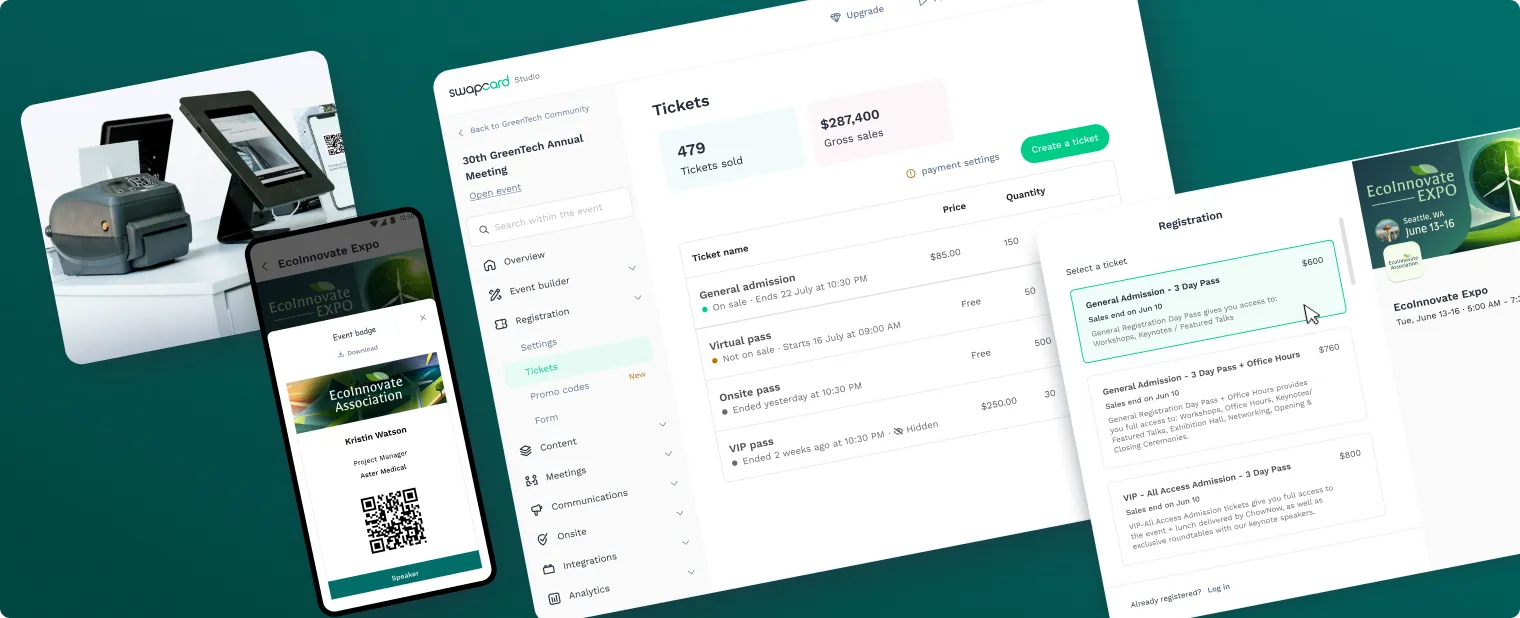
Key takeaways: Swapcard is an AI-powered event management platform built for organizers who want registration to be the starting point of a richer attendee experience, not just a data collection step. It handles customizable event registration workflows, multi-tier ticketing, integrated payment processing, onsite check-in, and badge printing within a single interface, while its AI-driven engine personalizes session and networking recommendations from the moment someone signs up.
Ideal for events where measurable ROI and attendee engagement drive business outcomes. What sets Swapcard apart is its revenue-first approach — registration isn't just data collection, it's the foundation of a unified platform that connects registration data to AI-powered networking, lead generation, and year-round community engagement that drives measurable revenue growth.
Key Registration Features:
- Multi-tier ticketing with promo codes, discounts, and dynamic pricing
- Unified attendee + exhibitor registration
- Modular packages & add-ons
- Native integrations with 26+ registration and multiple AMS platforms
- Payment processing via Stripe with flexible gateway options through integrations
Swapcard Stands Out For:
- Unified attendee and exhibitor registration fuels AI matchmaking and monetization from sign-up through post-event
- 70%+ app adoption, turning registration into active engagement and revenue opportunities
- AI-powered lead generation that combines registration data with behavioral signals (session views, booth visits, profile engagement)
- Self-service exhibitor monetization — Exhibitors purchase digital upgrades, lead generation tools, and premium placements through an integrated marketplace
- Revenue-first platform — Generate new streams through digital ticket upgrades, exhibitor packages, and year-round community engagement
2. Cvent

- G2 Ratings: 4.3/5 (3,105)
- Pricing Model: Annual license + per-registrant fees
- Best for: Enterprise organizations needing sophisticated multi-tier registration, complex approval workflows, venue sourcing, and extensive payment processing options for large-scale summits and trade shows.
Key takeaways: Cvent offers one of the most comprehensive registration platforms on the market, covering custom forms, multi-session selection, group bookings, payment processing, and onsite check-in within a single enterprise-grade system. Its CRM and marketing automation integrations make it a strong choice for corporate event teams that need registration data to connect directly to their sales pipeline and marketing workflows, with the unique addition of venue sourcing integrated directly into the platform.
Key Registration Features:
- Advanced workflow automation and approval processes
- Multi-event registration and portfolio management
- Custom registration paths with conditional logic
- Waitlist and session capacity management
- Extensive payment gateway support with financial reconciliation
Cvent stands out for:
- Most comprehensive feature set addressing virtually any event registration need
- Unique Supplier Network for venue sourcing and booking directly within the platform
- 100+ integration marketplace, including native Salesforce, Marketo, Eloqua, and Pardot
- Advanced payment processing with sophisticated financial reconciliation tools
- Enterprise-scale capabilities built for the most complex, large-scale corporate events
3. Bizzabo
- G2 Ratings: 4.3/5 (405)
- Pricing Model: Per-user annual subscription
- Best for: Enterprise B2B conferences and event portfolios requiring unlimited registrations, data-driven insights, deep CRM integration, and professional event marketing capabilities.
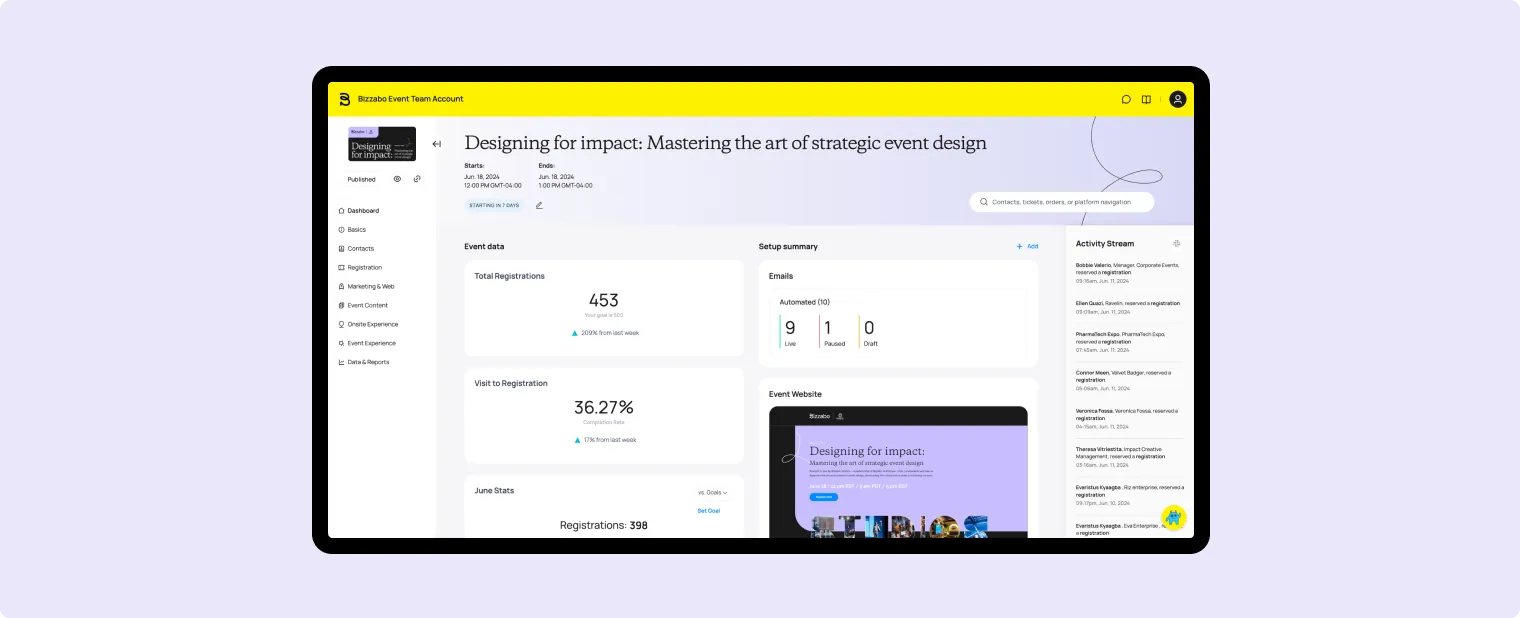
Key Takeaways: Bizzabo is an event registration and management platform with a strong focus on attendee experience, branding, and data-driven insights. It enables organizers to create branded registration pages, manage unlimited registrations without per-person fees, and track registration performance through comprehensive dashboards. Ideal for organizations running multiple events annually, Bizzabo offers deep native integrations with CRM and marketing automation tools, making it a natural fit for B2B marketers running sophisticated event programs.
Key Registration Features:
- Custom-branded registration forms and event websites
- One-click social registration (LinkedIn, Google)
- Real-time HubSpot sync and one-way Salesforce integration
- Multiple ticket types, bundles, and group registration
- Unlimited registrations included (no per-attendee fees)
Bizzabo stands out for:
- Event Experience OS approach to managing entire event portfolios, not just single events
- Data-driven marketing analytics with cross-event reporting and portfolio-level insights
- Deep native integrations with Marketo, HubSpot, and Salesforce for seamless data flow
- Modern, intuitive user interface praised for ease of use by event marketers
- Klik SmartBadge™ technology with NFC for enhanced experiential engagement and lead capture
4. Whova
- G2 Ratings: 4.8/5 (1,835)
- Pricing Model: Per-event pricing + transaction fees
- Best for: Academic conferences, association events, and professional gatherings seeking affordable, user-friendly solutions with strong mobile engagement and instant payouts.
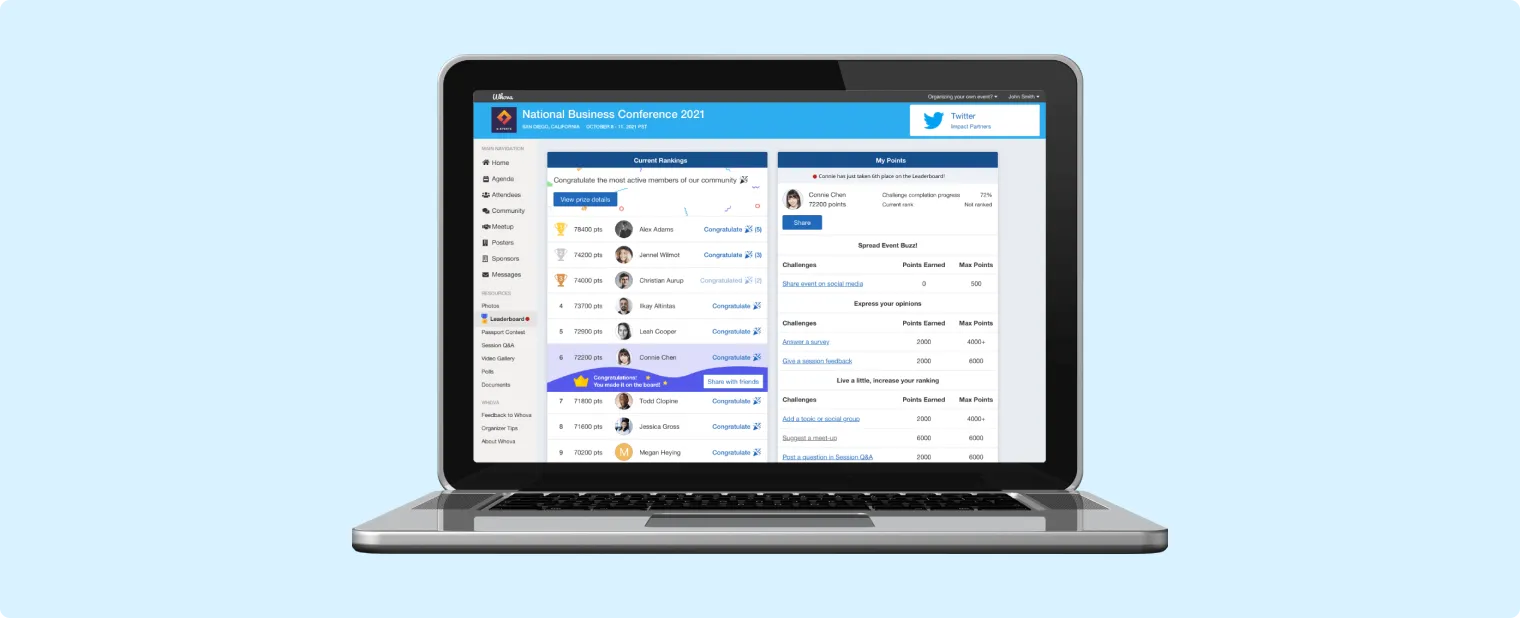
Key takeaways: Whova combines event registration with attendee engagement features, making it popular among organizers who want participants to stay connected before, during, and after the event. Registration feeds directly into the attendee app, enabling personalized agendas, networking, and live polls without additional setup. Quick to implement and easy to use, it works well for in-person and hybrid events.
Key Registration Features:
- Simple registration form builder with conditional logic
- Instant payouts in 39+ countries via Stripe (no waiting until after the event)
- Early bird pricing, group discounts, and promo codes
- Attendee self-check-in with QR codes
- Free events and paid ticketing support
Whova stands out for:
- Budget-conscious positioning is ideal for nonprofits, associations, and academic conferences
- Instant payouts in 39+ countries with no waiting until after the event
- Minimal learning curve, allowing non-technical users to build registration in minutes
- Strong mobile app experience with networking, live polling, and community boards
- Quick setup with registration pages launched in minutes
5. RainFocus
- G2 Ratings: 4.6/5 (57)
- Pricing Model: Enterprise custom pricing (contact for quote)
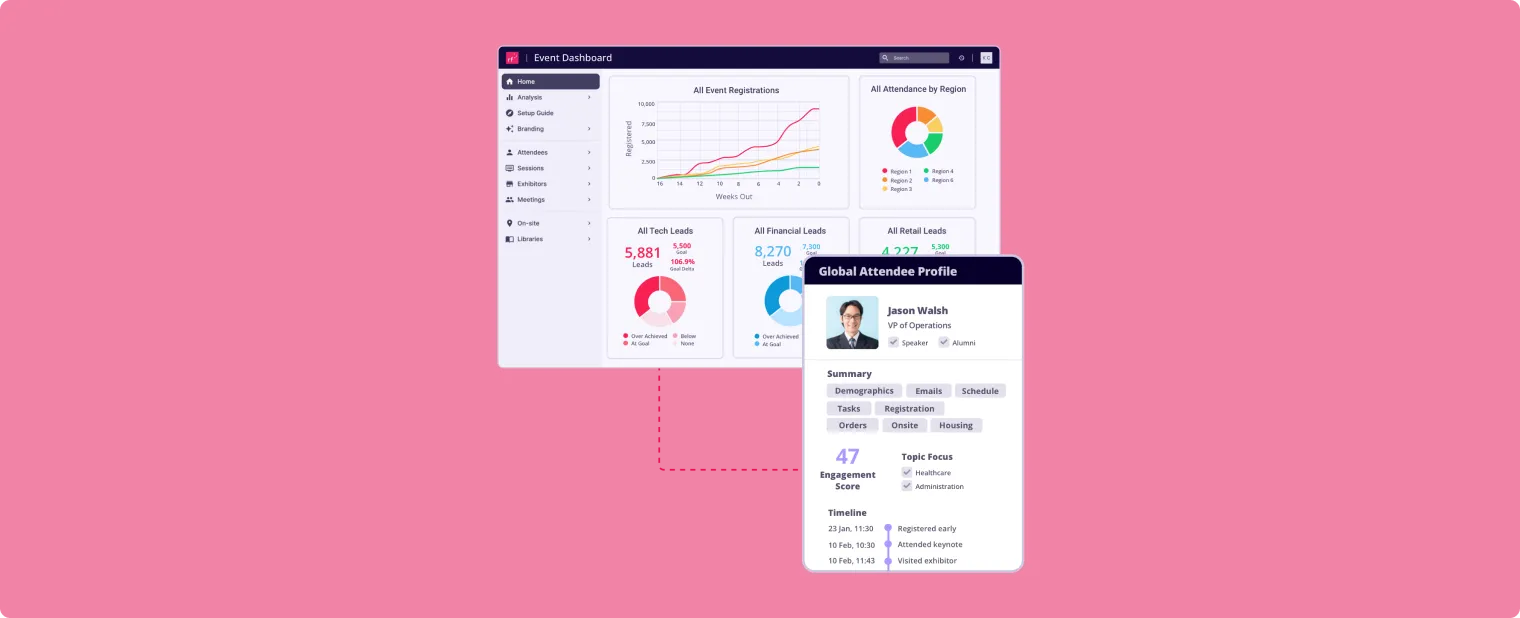
Best for: Marketing-driven events requiring robust campaign management, personalized attendee journeys, and deep data analytics for large enterprise conferences.
Key takeaways: RainFocus is an event registration and management platform built for B2B organizations running high-volume event programs where marketing and data insights are paramount. It supports customizable registration flows, content management, exhibitor activation, and onsite experiences within a centralized system, while consolidating attendee data for marketing attribution and ROI tracking.
Key Registration Features:
- AI-driven personalized registration journeys with tailored content
- Native Salesforce & Marketo integration
- Session registration, waitlisting, and capacity management
- Advanced conditional logic and rules engine for complex workflows
- Multi-event portfolio management with unified data
RainFocus stands out for:
- Marketing-first platform with event marketing and audience engagement at its core
- UTM tracking and conversion optimization throughout the registration funnel
- Real-time behavioral data capture across the entire event lifecycle
- Modular architecture with nearly limitless customization through rules engine
- 40+ native integrations, including Salesforce (native app), Oracle Eloqua, and Adobe Marketo Engage
6. A2Z Events
- G2 Ratings: 4.1/5 (23)
- Pricing Model: Custom pricing (association-focused, contact for quote)
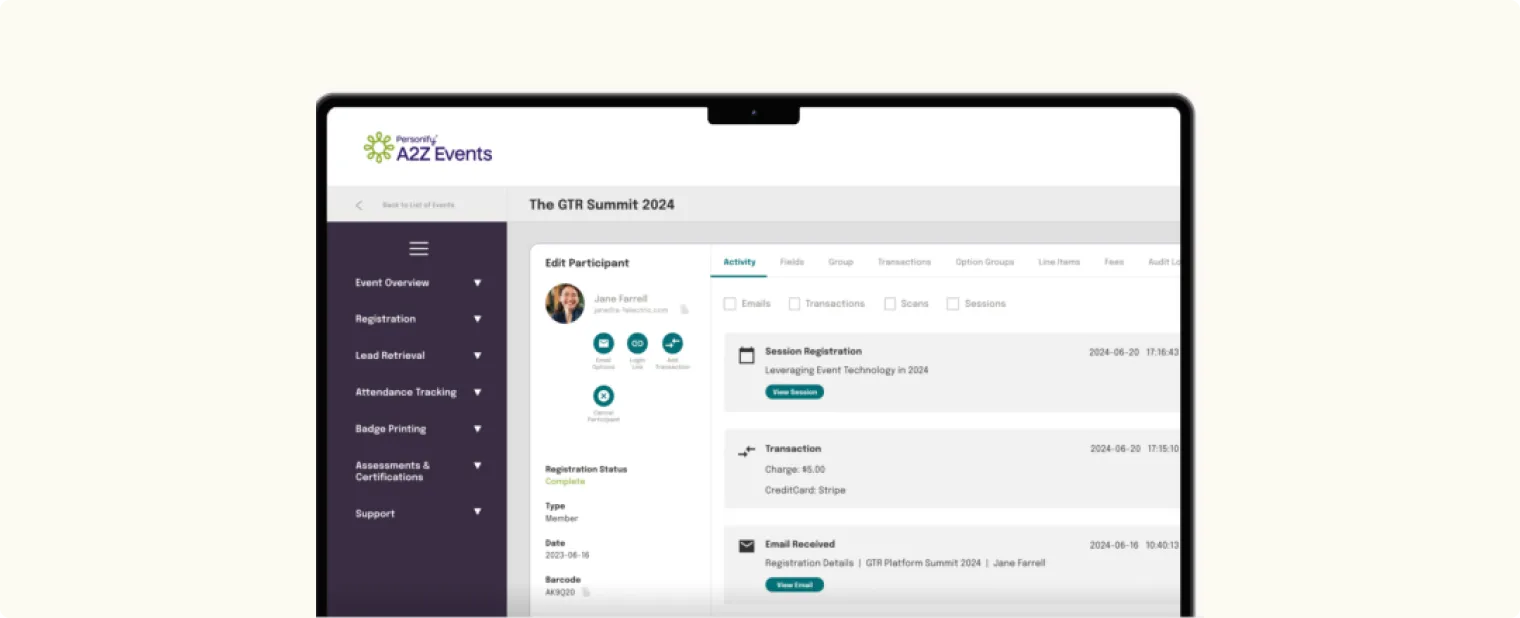
- Best for: Associations managing recurring annual events with member pricing, multi-year registration tracking, native Personify AMS integration, and complex exhibitor registration workflows.
Key Takeaways: A2Z Events is an event registration platform built specifically for associations, trade shows, and conferences with more than 25 years of experience. It supports member vs. non-member pricing, badge printing, onsite check-in, floor plan management, exhibitor and sponsor management, and lead retrieval within a connected interface. Its multi-year, multi-event structure makes it well-suited for organizations running recurring shows that require consistent data and year-over-year reporting across editions.
Key Registration Features:
- Member vs. non-member pricing with automatic verification
- Native Personify AMS integration (seamless data sync)
- Multi-year event tracking and historical data comparison
- Group registration management with custom approval workflows
- Complex exhibitor registration and booth management
A2Z Events Stands Out For:
- Purpose-built for associations with 25+ years of trade show and exhibition expertise
- Seamless Personify AMS integration for member verification and data sync
- Built-in intelligent matchmaking drives quality connections between attendees and exhibitors
- Year-over-year reporting to compare events and identify optimization trends
- Drag-and-drop form builder requiring no technical knowledge
7. Swoogo
- G2 Ratings: 4.9/5 (206)
- Pricing Model: Per-user annual subscription
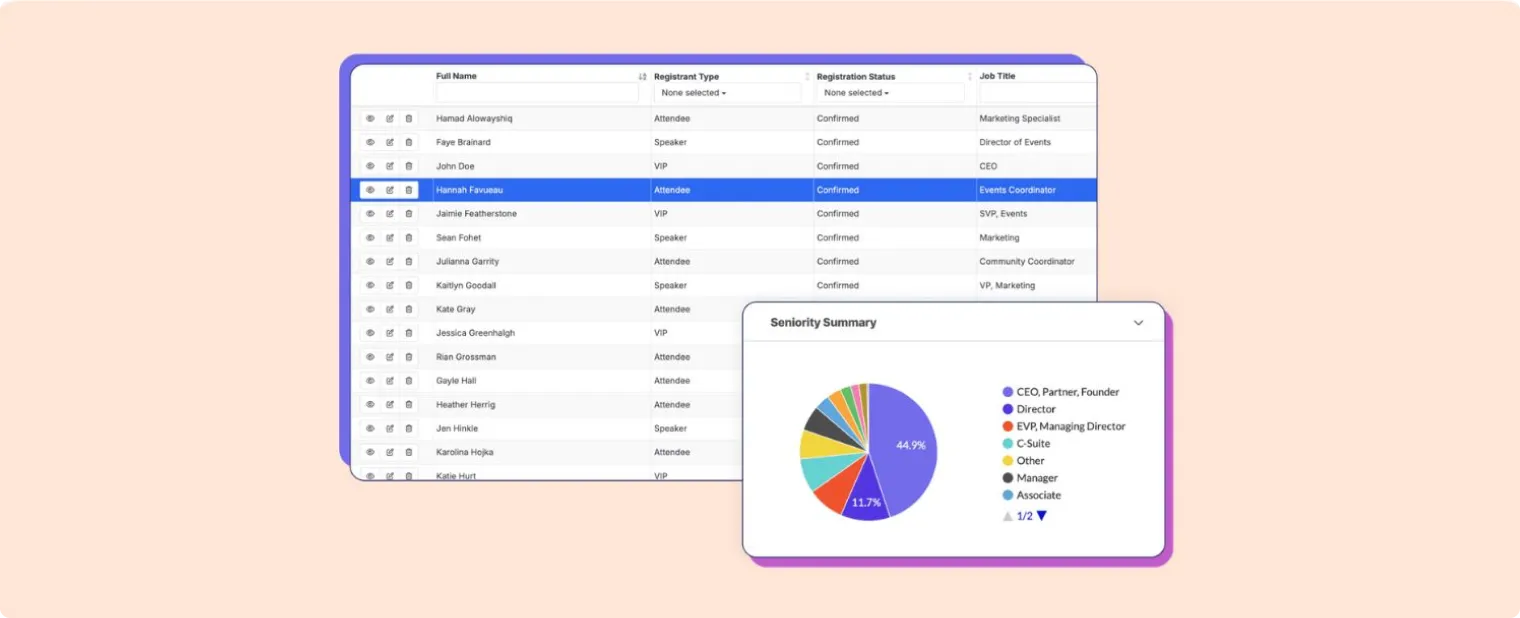
- Best for: Field marketing events and mid-market conferences requiring unlimited registrations, highly customizable registration paths with advanced conditional logic, and developer-friendly tools without per-registrant fees.
Key Takeaways: Swoogo is an online event registration platform built for event planners who require deep customization without requiring technical expertise. It offers unlimited custom rules, conditional logic, flexible registration forms, branded event websites, automated email communications, and onsite check-in tools. Native integrations with 30+ platforms and an open API make it easier to connect registration to existing marketing technology stacks.
Key Registration Features:
- Unlimited registrations with no per-person fees
- Drag-and-drop form builder with advanced conditional logic
- Advanced conditional logic
- Custom branding and white-label capabilities
- 30+ free native integrations, including Salesforce, HubSpot, and Marketo
Swoogo stands out for:
- Dedicated in-house support team (not outsourced) trained on the platform
- Unlimited customization with custom rules, logic, and registration fields without coding
- Developer-friendly open API for custom integrations and workflows
- Robust call for speakers and sessions proposal review system
- Mid-market events needing enterprise features with accessible pricing
8. RegFox
- G2 Ratings: 4.7/5 (556)
- Pricing Model: Pay-per-registrant
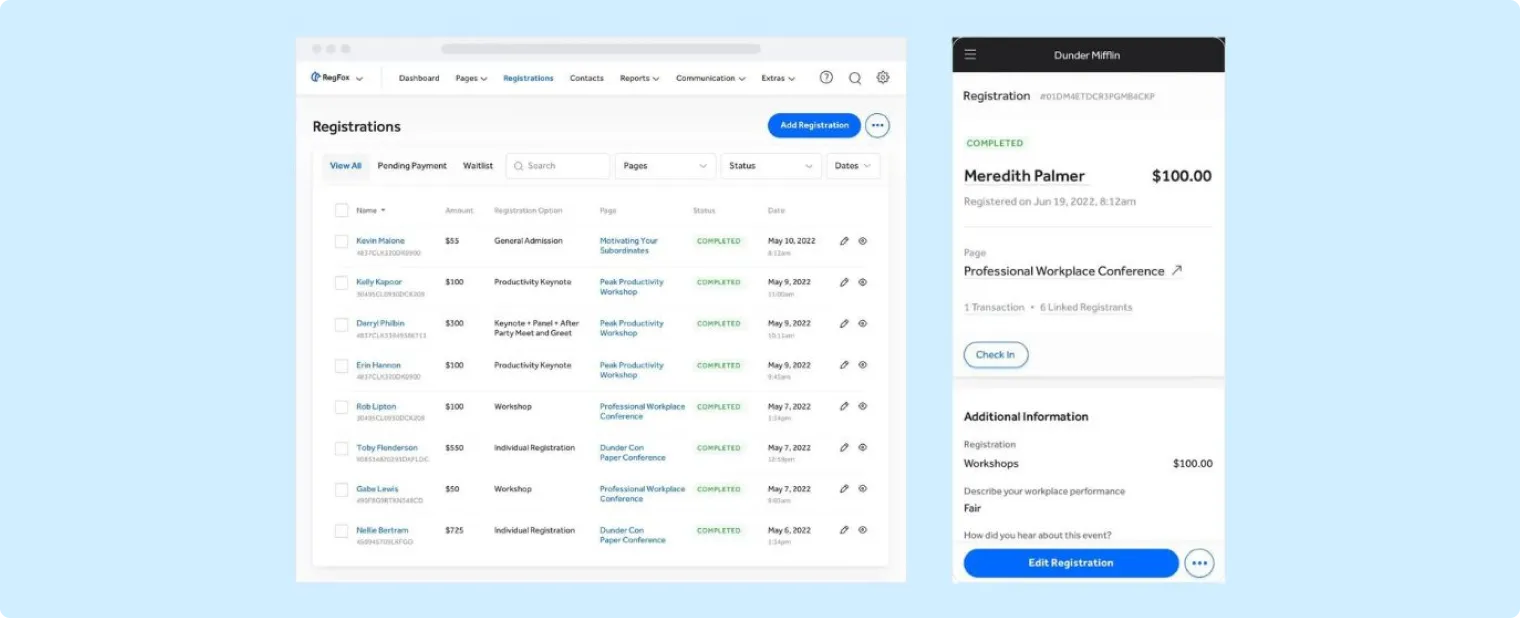
- Best for: Budget-conscious organizations hosting conferences, fundraisers, and community events seeking low fees, instant payouts, and simple setup.
Key takeaways: RegFox is an event registration platform that offers robust functionality at a lower price point. It includes a drag-and-drop event page builder, conditional logic, badge printing, onsite check-in, payment plans, and real-time analytics without upfront licensing fees.
Its per-registrant pricing model and weekly funding schedule make it appealing for organizers seeking cost flexibility.
Key Registration Features:
- Lowest per-registrant cost (capped fees)
- Simple form customization with drag-and-drop builder
- Conditional form fields and advanced logic
- Group registration and automatic discount codes
- No monthly subscription fees or contracts
RegFox stands out for:
- Small to mid-sized events seeking flat-fee, low-cost registration with simple form builders
- Pay-as-you-go pricing with no contracts or hidden fees
- Weekly funding schedule (get paid weekly, not after the event)
- Launch-in-minutes setup for fast deployment
- Payment plan options letting registrants pay in installments with automatic capture
9. Eventleaf
- G2 Ratings: 4.7/5 (111)
- Pricing Model: Pay-as-you-go per-attendee
- Best for: Corporate meetings, training, and mid-sized conferences looking for straightforward event management with native mobile apps and centralized tools.
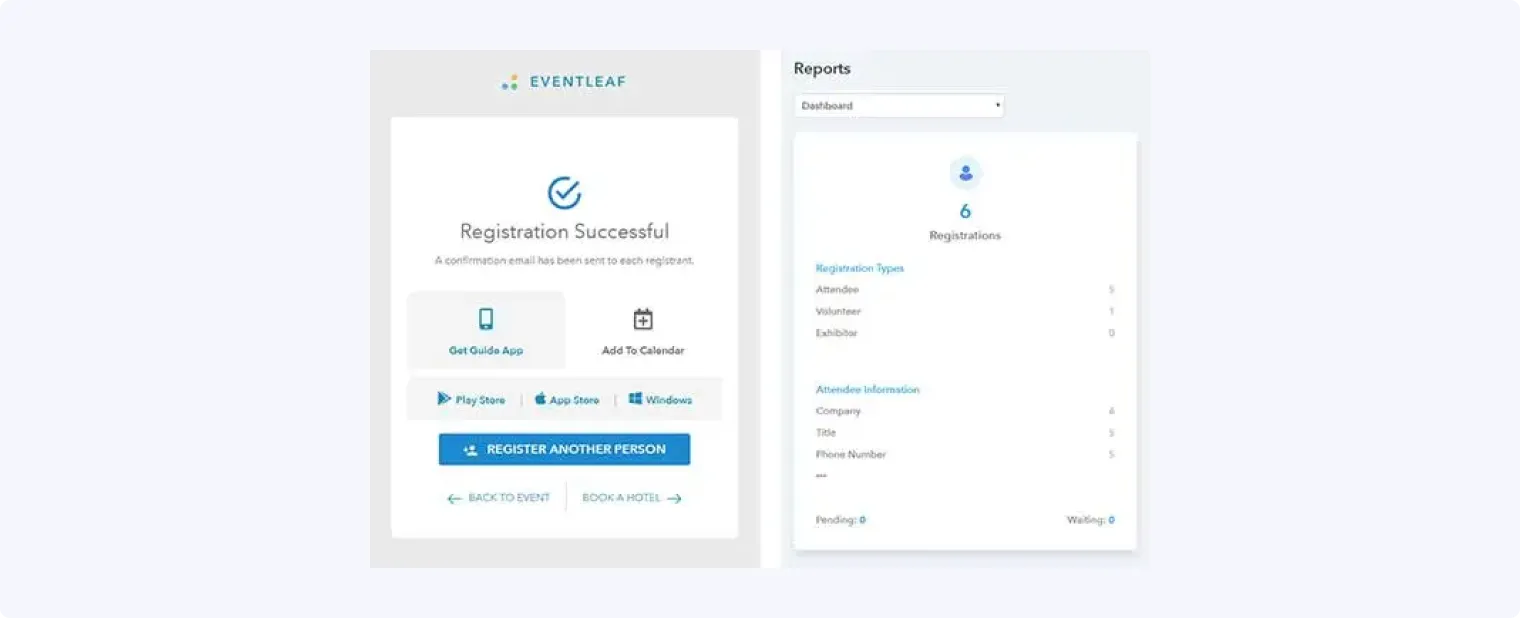
Key takeaways: Eventleaf emphasizes a smooth registration-to-check-in process with three native apps for complete event lifecycle management. Organizers can create custom registration forms, print badges onsite, and manage QR code check-in from a unified system with a minimal learning curve. Integrations with Salesforce and Zapier provide additional flexibility. Eventleaf is a dependable option for corporate seminars and trade shows that prioritize straightforward onsite logistics and recurring event series.
Key Registration Features:
- Customizable registration forms with conditional fields
- Onsite registration and QR code check-in
- Badge printing integration with real-time updates
- Automated email confirmations and reminders
- Pay only for actual attendees (no upfront platform fees)
Eventleaf stands out for:
- Three native apps (management, check-in, leads) for the complete lifecycle
- Organizations running corporate meetings and recurring event series
- Organizations wanting quick deployment with minimal IT involvement
- Single mobile event guide giving attendees one touchpoint for all information
- Native Salesforce integration for CRM data sync and lead capture
10. Eventcube
- G2 Ratings: 4.7/5 (43)
- Pricing Model: Transaction-based + ticket fees
- Best for: Ticketed events, entertainment venues, and organizations requiring white-label ticketing solutions with full brand control and flexible payment processing.
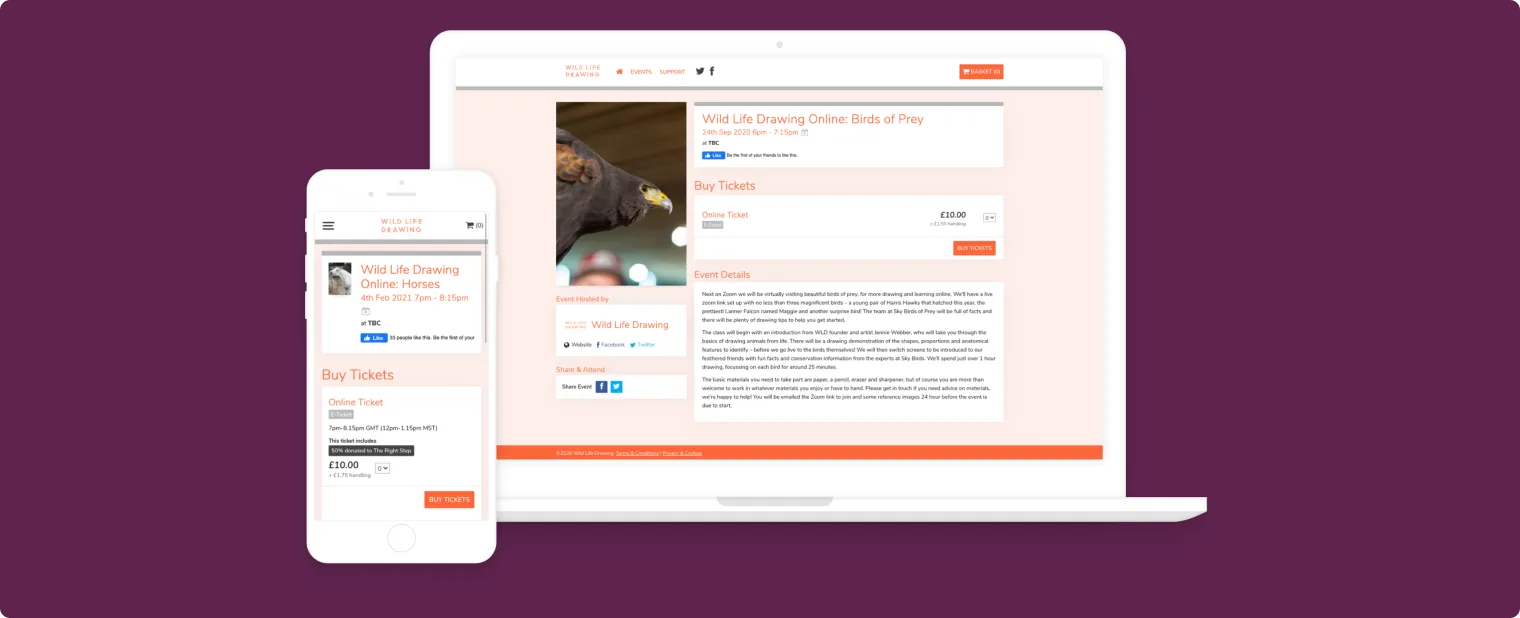
Key takeaways: Eventcube is a white-label event registration and ticketing platform designed for organizers who want full brand ownership. It supports customizable registration flows, tiered ticketing, virtual events, live streaming, and membership management within a single interface. Integrations with Mailchimp, Stripe, and Intercom support core marketing and payment needs. Best suited for entertainment, media, and corporate events where branded ticketing pages matching website aesthetics are a priority.
Key Registration Features:
- Fully white-label ticketing platform with custom branding
- Self-service event creation and management
- Stripe integration supporting 100+ payment options globally
- Seating charts and floor plan management (via Seats.io)
- Configurable booking fees (10% default, fully customizable)
Eventcube stands out for:
- Fully white-label ticketing platform that showcases the organizer's brand
- Unified platform managing both events and memberships
- Flexible payment gateway options with organizer control over processing fees
- Self-service model giving organizers full control without extensive support dependency
- Branded ticketing pages matching the event website for a seamless user experience
11. Stova
- G2 Ratings: 4.2/5 (198)
- Pricing Model: Enterprise custom pricing (contact for quote)
- Best for: Enterprise-level strategic meetings management (SMM) programs requiring complex registration across multiple locations and event types.
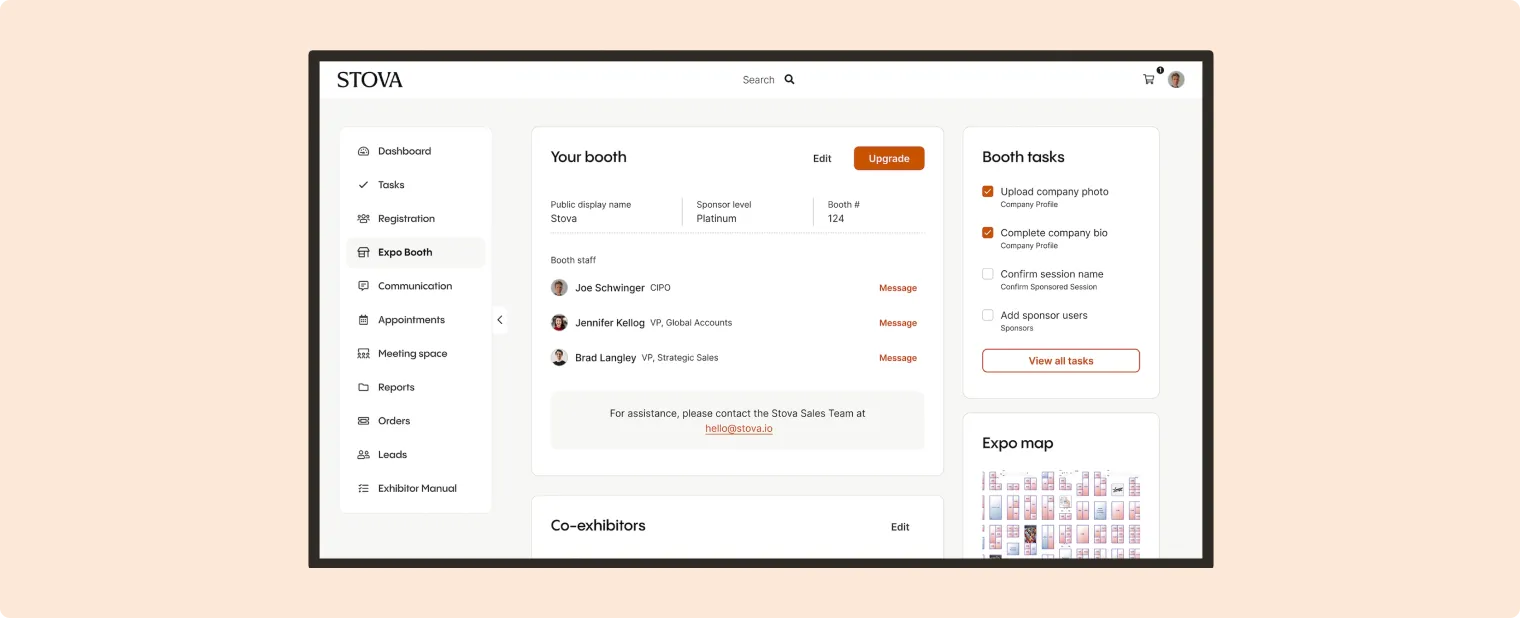
Key Takeaways: Stova is a comprehensive event registration and management platform formed from the merger of MeetingPlay, Aventri, and EventCore, combining the strengths of three enterprise platforms. It manages the full registration journey including customizable workflows, payment processing, branded event websites, onsite check-in, badge printing, and session access control. It also connects attendee data to networking tools, mobile apps, and post-event analytics within a centralized system, with enterprise-wide visibility into all meetings across the organization.
Key Registration Features:
- Multi-track registration paths with conditional workflows
- Approval workflows and permission-based access controls
- Session capacity management and automated waitlists
- 60+ payment gateway integrations
- Virtual, hybrid, in-person event support
Stova stands out for:
- Purpose-built Strategic Meetings Management (SMM) software with enterprise calendar consolidation
- Enterprise-wide visibility into all meetings across the organization in a centralized calendar
- Spend tracking, compliance, and ROI across the entire meetings program
- Complex multi-location, multi-format event portfolio management at scale
- Strong virtual and hybrid capabilities from MeetingPlay's heritage with professional production tools
How to Choose the Right Event Registration Platform for Your Event?
With so many event registration platforms available, choosing event software that fits your specific needs can feel overwhelming. Most organizers can narrow their shortlist by answering three key questions: What type of event am I organizing? What capabilities does my team need to manage it effectively? And what is the realistic budget once all associated costs are considered?
Match the Event Registration Platform to Your Event Type
Event organizers should start by clearly defining their event: the type (in-person, virtual, or hybrid), whether it's free or paid, and whether it's one-off or recurring.
A platform built for concerts and festivals may feel inefficient if you are organizing a B2B conference, while a corporate event management tool could be excessive for a monthly community meetup.
For large professional events, you may need an event registration platform that supports multi-session selection, group bookings, speaker portals, and sponsor management. For smaller events, simplicity and speed of setup are often more valuable than advanced features you may never use.
Hybrid events deserve special attention. Since 2020, managing both in-person and virtual attendees from a single platform has shifted from a "nice to have" feature to a core requirement for many event organizers. Look for event registration platforms that support both audiences seamlessly within the same system.
Think Beyond the Registration Form
Registration is only the beginning of the attendee journey. The best event registration platforms are designed to support the full lifecycle of the event experience.
Consider questions such as:
- Can you send automated reminder emails with personalized agendas?
- Does the platform provide a dedicated event website and a mobile app for attendees to network and plan their day?
- Is there a lead retrieval tool for exhibitors?
Community features, such as year-round networking spaces, discussion forums, or AI-powered matchmaking, are increasingly influencing how organizers evaluate event registration platforms.
When these capabilities are built within a single platform, attendee engagement improves, and your team avoids switching between disconnected tools or manually syncing data.
Pricing models: What to Watch Out for
The cost of event registration platforms varies significantly. In event management, the listed price rarely reflects the total investment. Some platforms charge a flat monthly or annual subscription fee. Others take a percentage of ticket sales as event registration fees. Some charge per attendee, per event, or per feature unlocked.
Event organizers should calculate the total cost based on expected attendance, ticket pricing, and expected feature usage. An event registration platform that appears affordable initially can become expensive once payment processing fees, add-on modules, or per-registrant charges are factored in.
What Is Changing in the Events Registration Industry?
The events industry has evolved significantly in recent years. The rapid shift to virtual events raised attendee expectations around digital experiences, personalization, and ease of use.
As in-person events have returned, organizers now face audiences who expect seamless digital registration experiences alongside smooth onsite execution. Several trends are reshaping what event registration platforms must deliver.
- AI-powered personalization: Some platforms use AI to recommend sessions, suggest networking connections, or predict no-show rates based on historical data, giving organizers actionable insights before the event even begins.
- Deeper CRM and marketing integrations: Leading event registration platforms offer bidirectional synchronization with tools like Salesforce, HubSpot, and Marketo. Registration data flows directly into sales and marketing workflows, reducing manual exports and improving follow-up efficiency.
- Community-first features: Many organizers are prioritizing platforms that support year-round attendee engagement, persistent attendee profiles, networking spaces, and content libraries. Swapcard’s community builder is built around this philosophy: helping turn events into ongoing communities.
- White-label and customization options: Brand consistency is increasingly important. Agencies and enterprise teams expect custom domains, tailored registration flows, and white-label capabilities that reflect their brand identity rather than the software provider’s.
- Hybrid event support as a standard: Managing in-person and virtual attendees within one event registration platform is now an expectation rather than an exception.
Conclusion: Sell More Tickets and Drive Attendance with the Best Event Registration Platform
Choosing the right event registration platform for your workflow and event goals helps ensure a strong experience for attendees, exhibitors, and organizers alike. Registration sets the tone for the entire event journey while driving operational efficiency and reliable data collection. For professional event organizers, registration should not function as an isolated tool. It should seamlessly integrate with engagement features, exhibitor management, and post-event reporting. Swapcard is built with this integrated approach in mind — helping event professionals streamline execution while turning registration into a strategic driver of measurable event success.
Frequently asked questions about event registration platforms
What is the difference between an event registration platform and a ticketing platform?
A ticketing platform primarily focuses on selling tickets and processing payments. An event registration platform supports a broader set of capabilities, including custom registration forms, attendee data management, check-in tools, badge printing, session selection, and integrations with CRM or marketing systems. If you are running a multi-track professional event, you will likely need a full registration platform. For entertainment events, a ticketing platform may be sufficient.
How many attendees can event registration platforms manage?
Most enterprise-grade event registration platforms are designed to scale to tens of thousands of attendees without performance issues. Beyond scalability, organizers should consider the complexity of their registration flows. Multiple ticket types, conditional logic, group registrations, and real-time capacity management all require a platform that can reliably handle advanced configuration.
What should I look for regarding data security and privacy compliance?
At a minimum, your event registration platform should be GDPR-compliant if you operate in Europe or collect data from European attendees. This includes consent management, compliant data storage, and the ability for attendees to request data deletion.
Beyond GDPR, look for platforms with SOC 2 certification, indicating audited security controls. If payment data is processed, PCI DSS compliance is essential.
Can I use an event registration platform for free events?
Yes, most platforms support free events, though pricing models vary. Without ticket revenue, organizers may pay a flat subscription fee, a per-registrant fee, or nothing if attendance remains below a certain threshold.
Some event registration platforms offer free tiers for small events with limited features, which can be a good starting point for organizers with restricted budgets. Before choosing a solution, confirm that essential capabilities such as custom branding or integrations are included in the plan.

Irene Montes
Growth Marketer
Drives demand generation and lifecycle campaigns at Swapcard, using data-driven experimentation to grow audience engagement and pipeline for the event platform.


.webp)

Join 12,000 subscribers and unlock industry secrets.
By submitting this form, you agree to receive periodic emails on insightful content related to events and our product, and in accordance with our Privacy Policy. You can, of course, change your preferences or unsubscribe at any time.



.svg)

.svg)
