


The late-registration economy: Predicting and monetizing last-minute sign-ups
.png)
Open any event organizer's inbox in the two weeks before their annual conference, and you will find the same thread: "Late registrations are killing us." Badge orders placed too early. Session caps already set. The event app launched before a third of attendees had even signed up.
The assumption behind this panic is that late sign-ups are a problem to be solved—stragglers who should have registered months ago. But the evidence tells a different story. Late registrations are not an anomaly. They are a pattern.
For associations and trade show organizations, the final two to four weeks before an event consistently produce a disproportionate share of total registrations. The shape of this curve—a slow ramp in early bird season, a quiet middle, and a sharp late surge—is nearly universal across event types and audience sizes. The organizers who treat this surge as a strategic moment rather than an operational crisis are the ones capturing revenue that others leave behind.
Why late registrants are not who you think they are
There is a temptation to write off late registrants as last-minute, low-value attendees—the kind who show up unprepared and skip the networking. This assumption is wrong.
Late registrants at association events and trade shows are often senior decision-makers whose budgets or schedules were confirmed at the last minute. They are speakers' direct contacts, exhibitor guests with comp codes, and professionals who follow the event but wait until urgency forces the purchase. In many cases, they are the highest-revenue attendees on your list because they are registering at onsite or standard rates—not the discounted early bird price you sold out three months ago.
The late-registration window is, paradoxically, when your event sells itself. Your full speaker lineup is announced. Social proof from early registrants is visible. The FOMO is real. Attendees arriving in this window are often more motivated, more senior, and more likely to engage meaningfully once they are in the room.
Predicting your late surge
The first step in monetizing late registrations is knowing when yours will arrive. This is more predictable than most organizers realize.
Registration velocity—the rate at which sign-ups arrive per day or per week—follows a recognizable pattern for most recurring events. If you have run the same conference or trade show for more than two years, your historical data contains a blueprint. Look at the percentage of total registrations that arrived in the final 30, 14, and seven days in previous years. You will likely find the ratio is consistent.
For associations in particular, two external factors tend to amplify the late surge: membership renewal cycles and fiscal year budgets. If your event falls in Q4, expect a spike as organizations spend their remaining budget. If you send a membership renewal notice in the same period, the combined momentum can compress registrations significantly into the final weeks.
Real-time registration analytics help you see this curve as it forms, not just in hindsight. Monitoring daily registration velocity in the final six weeks—and comparing it to the same period in prior years—tells you whether you are running ahead of pace, behind, or on track. This information is worth more than any forecast model because it gives you time to act.
Building a monetization strategy around the late window
Knowing the surge is coming is one thing. Having a deliberate strategy to maximize its value is another.
Onsite pricing is your most powerful lever, and organizers underuse it. The gap between early bird and onsite rates represents a significant revenue opportunity, but only if you protect it. Resist the temptation to extend early bird pricing as the event approaches—this trains future audiences to wait. Let the price rise as planned and use targeted offers to reward specific segments without undermining your rate card.
Promo codes with hard expiry dates are the most precise tool for this. Offering a seven-day discount code to past attendees who have not yet registered creates urgency without publicly discounting. The code expires on a specific date, drives conversion in the window when you need it, and leaves your public pricing intact. Single-use codes distributed to exhibitor contacts serve the same purpose while extending your reach into networks you do not own.
The last-minute registration window is also the right moment to drive upsells. Attendees who register at the final hour are often flexible—they did not plan far in advance, which means they have not locked into a specific experience. A targeted offer for session bundles, VIP access, or hosted buyer participation presented at the point of registration converts at a higher rate in this window than at any other time
Turning waitlists into a second pipeline
Session waitlists deserve a dedicated strategy that most organizers overlook entirely.
When popular workshops fill early, a managed waitlist creates a second registration moment. When spots open—through cancellations or capacity adjustments—the waitlisted attendee has already committed intent. Converting a waitlist into a registration is easier than converting a cold prospect, yet most organizers do not track or work their waitlists systematically.
The same logic applies to your event's premium experiences. If a hosted buyer program or VIP session has a waitlist in the final two weeks, that list is a prioritized outreach sequence, not a passive queue. Contact them in order. Set a response window. Move to the next person if you do not hear back. Treat the waitlist like the sales pipeline it is.
The operational question no one asks until it is too late
Most discussions about late registrations stop at the marketing layer—how to drive them, how to price them. The harder question is whether your operational setup can actually absorb them.
The traditional registration workflow assumes most attendees sign up weeks in advance. Badges are pre-printed based on a list that was closed days before the event. The event app launches with a static attendee directory. Session capacities are set and not revisited. This workflow was not designed for a world where 30 percent of your attendees register in the final week.

When registration and your event platform live in separate systems, every late sign-up creates a manual task: export the new registrant, import them into the app, reprint a badge, update the session count. At scale, this creates the check-in day chaos that registration managers know well—long queues, missing badges, attendees who cannot access the app or find their session assignments.
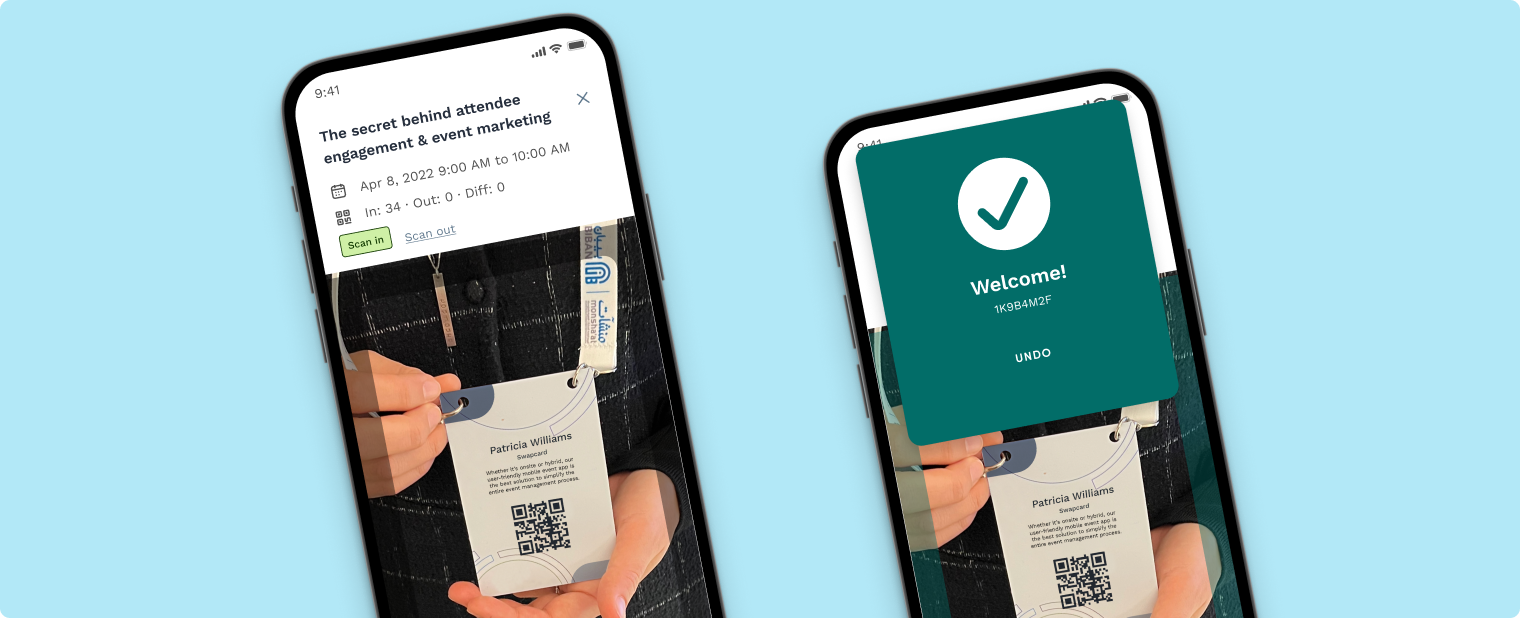
The operational fix is not faster manual processes. It is eliminating the gap between registration and the event experience entirely. When a registrant completes their purchase and appears in the app in real time—profile built, sessions available, networking enabled—the late registration ceases to be an operational problem. The badge prints on demand at a self-service kiosk. The session cap updates automatically. The organizer sees one fewer problem to solve the morning of check-in.
What late registrations reveal about your platform
There is a useful stress test embedded in every late-registration surge: it reveals exactly which parts of your event stack were not built for it.
If your event app cannot launch until the registration list is "stable," your registration and engagement tools are not integrated. If your badge vendor requires a final headcount 10 days before the event, you are paying for a process that punishes your best prospects for deciding late. If your session registration cannot update capacity limits in real time, you are turning away revenue because a spreadsheet does not refresh fast enough.

The late-registration economy rewards organizers who have resolved these architectural problems in advance. The financial upside—full-price registrations, upsells, last-minute session add-ons—goes to events that can accept and process registrations on the morning of day one with the same operational ease as registrations placed four months earlier.
For associations in particular, where member trust and event experience quality are tied directly to renewal rates, a smooth late-registration experience is not just a revenue issue. An attendee who registers at the last minute and has a seamless check-in, a fully populated app, and immediate access to sessions is more likely to become an early registrant next year.
Treat the late surge as a strategy, not a symptom
The late-registration economy is not a problem created by disorganized attendees. It is a structural feature of how decisions get made—budget cycles, competing priorities, late-breaking schedules. The organizers who understand this build their registration strategy around it from the start.
Set your pricing tiers and protect them. Use targeted promo codes to drive urgency in the final weeks without undermining your rate card. Monitor registration velocity against historical baselines and act early if you are behind pace. Manage your session waitlists as a second conversion pipeline, not a passive list. And build or migrate to a platform where a registration that arrives at 8:00 AM on event day is handled with the same operational ease as one that arrived in January.
The late surge is coming. The question is whether you are ready to profit from it.
See how Swapcard's registration solution handles the full attendee journey—from first sign-up to badge in hand.

Jessica Duarte
Product Marketing Manager | Swapcard
Shapes product marketing and go-to-market strategy at Swapcard, drawing on a background in event technology consulting and cross-functional digital marketing leadership.




Join 12,000 subscribers and unlock industry secrets.
By submitting this form, you agree to receive periodic emails on insightful content related to events and our product, and in accordance with our Privacy Policy. You can, of course, change your preferences or unsubscribe at any time.



.svg)

.svg)
