


Common Trade Show Planning Mistakes and How to Avoid Them
83% active app usage at IAEE Expo! Expo! did not happen because attendees suddenly loved downloading apps. It happened because the event experience gave them a reason to use the platform before they reached the show floor, which is where many trade show problems actually begin.
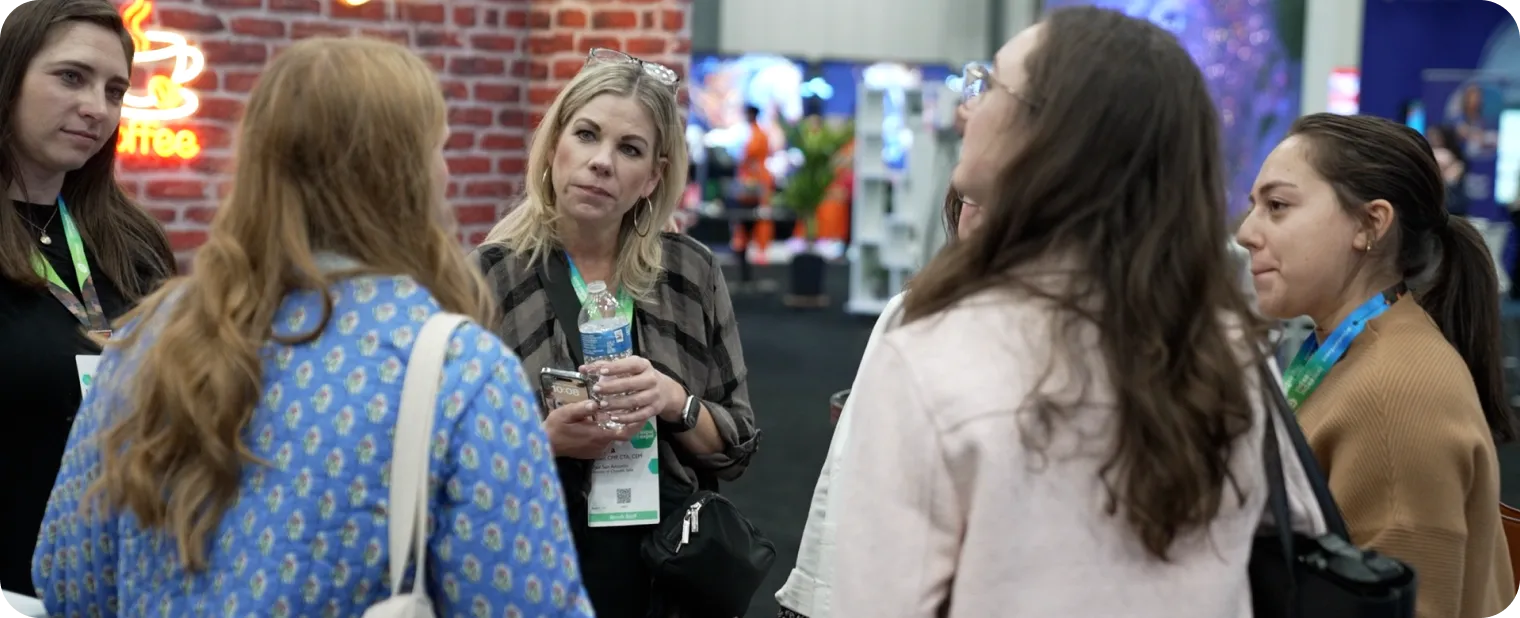
Trade show organizers often treat onsite execution as the main performance test. The tougher truth is that onsite problems usually expose decisions made weeks earlier: weak registration data, late exhibitor onboarding, disconnected Lead Capture, and reporting that cannot connect attendance to revenue. When those pieces sit in separate tools, the show can look busy and still fail the renewal conversation.
Key Takeaways:
- Trade show problems often start before the doors open, especially when registration, engagement, onsite access, and lead data are disconnected.
- Exhibitor return on investment (ROI) depends on qualified buyer signals, not just booth traffic or badge scans.
- Organizers should diagnose tool fragmentation by checking whether registration, check-in, sessions, meetings, leads, and sponsorship spend can be joined without manual spreadsheet work.
- A 3 to 4 week activation window gives attendees and exhibitors enough time to plan meetings, build agendas, and generate intent before the event.
- Hosted Buyer programs and lead qualification only work at scale when rules, profiles, meeting slots, and exhibitor goals are defined early.
- Board-ready reporting requires joined data across the full event lifecycle, not screenshots from four separate dashboards.
Why common trade show problems are really data problems
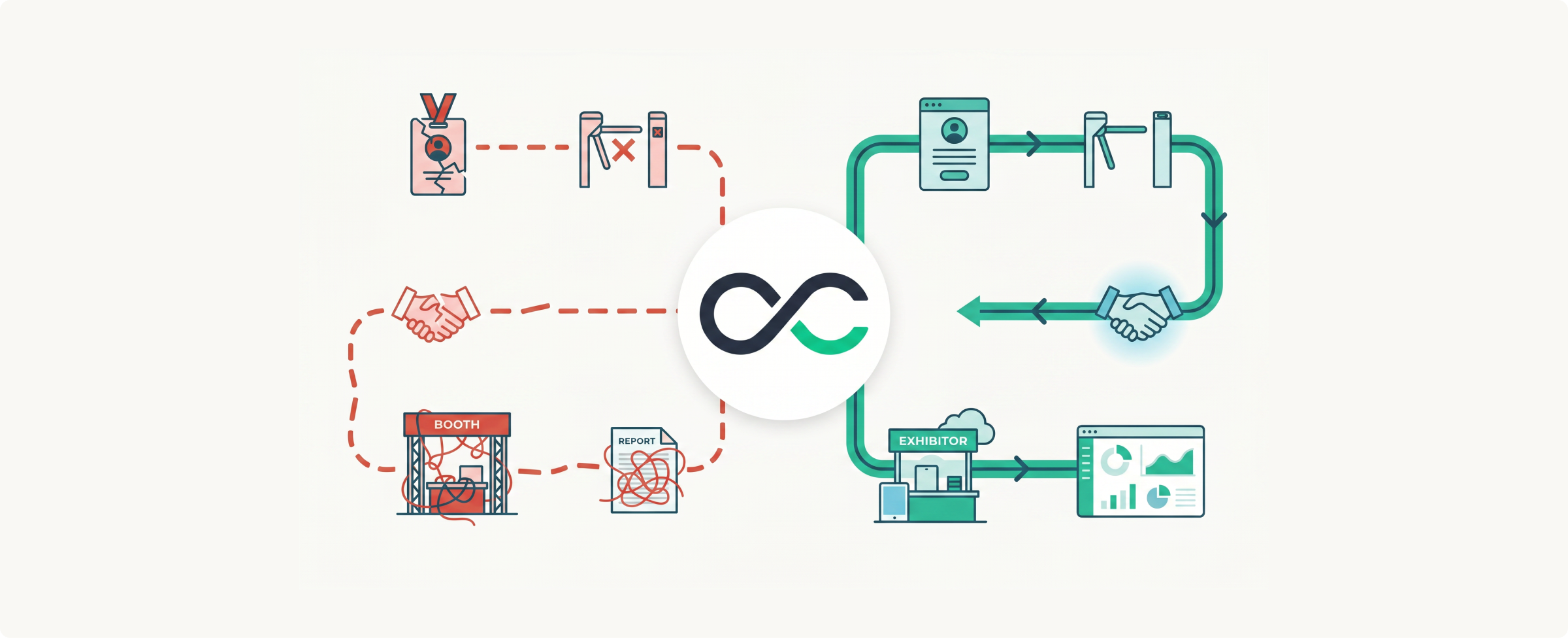
Common trade show problems rarely stem from a single bad onsite moment. They come from broken handoffs between registration, onsite access, engagement, exhibitor activity, and post-event reporting. When each stage captures data differently, organizers lose the thread that proves which attendees showed intent, which exhibitors received value, and which sponsors deserve renewal.
The onsite queue is usually a pre-event data failure
At 7:32 a.m. on opening day, a registration manager watches 400 early arrivals snake past three printer stations while the floor manager radios in: VIP buyers are stuck behind general attendees, and the keynote starts in 88 minutes. The issue appears to be poor queue management. In reality, the ticket type, access permissions, badge template, and check-in flow were never treated as one connected system. That mistake costs time before the keynote even starts.
Recurring trade show access problems often start with forms that collect data without using it. If the organizer asks for role, company type, ticket category, dietary needs, Hosted Buyer status, and session access, but those fields do not control the onsite journey, the team has created admin work rather than operational value. A simple diagnostic works well: if a field does not affect badge design, access rules, matchmaking, exhibitor segmentation, or post-event reporting within 30 days, remove it or collect it later. Fewer fields can produce better data when every answer has a job.
Are your registration fields actively shaping the onsite journey, or just sitting in a database? Are VIP, Hosted Buyer, and general attendee flows controlled by data, or by staff at the door? Learn more about Swapcard to see how the platform streamlines this entire flow, from registration through onsite access.
Badge scans do not prove exhibitor value
Exhibitors do not renew because they scanned badges. They renew when they can show that the right buyers engaged, met, asked questions, saved products, attended relevant sessions, or moved into sales follow-up. According to the CEIR research library, exhibitor value is closely tied to buyer quality and sales opportunities, not traffic volume alone.
The frequent trade show mistake is treating all leads as equal. A badge scan from an unqualified visitor, a Hosted Buyer meeting, a booth QR scan after a product demo, and an in-app message from a buying committee member do not carry the same commercial weight. A trade show floor is less like a ticket counter and more like an airport control tower. The organizer needs to know not only who arrived, but which terminal they walked to, which gate they actually boarded at, which connection they made, and whether that route ended in a closed deal or an empty seat. Scan totals only count the arrivals.
That difference matters because exhibitor ROI is now scrutinized earlier. A sponsorship director who walks into a renewal meeting with only scan totals is negotiating from memory. A director who can show buyer profile quality, meeting activity, session interest, content engagement, and scored leads is negotiating from proof.
Fragmented reporting weakens the renewal story
A busy show floor can hide a weak commercial story. Registration may sit in one system, the app in another, access control in a third, lead retrieval in a fourth, and sponsor deliverables in a spreadsheet owned by one person who is unavailable the week after the event. The event happened. The evidence did not travel with it.
This is why consolidation is not mainly about convenience. It is about revenue truth and attribution. If organizers need manual VLOOKUPs to connect check-in, session attendance, meetings, leads, and sponsorship spend, the reporting process becomes a risk. The team feels it too: late nights, version-control problems, missing exports, and a board deck that still cannot explain why next year's pricing should increase. The fix starts before the show floor opens, with measurable choices made in registration, exhibitor onboarding, and reporting design.
How organizers prevent common trade show mistakes before they happen
Organizers prevent typical trade show mistakes by designing the event around measurable intent before attendees arrive onsite. The practical method is to connect registration data, exhibitor goals, meeting rules, access permissions, and reporting needs early enough to shape behavior. The strongest programs treat the event platform as a revenue system, not a digital agenda.
Audit whether each data point changes an outcome
Run this test before your next registration form goes live: list every field, name an owner, and force that owner to explain in one sentence how the field affects access, matchmaking, segmentation, lead scoring, sponsor proof, or renewal pricing. If they cannot, the field is noise. Most teams discover that 30–40% of their registration fields fail this test on the first pass.
Event teams can complete this audit in 90 minutes with operations, registration, sponsorship, and exhibitor success in the same room. Map each surviving field to one of five outcomes: route the attendee, qualify the buyer, personalize recommendations, prove sponsor delivery, or support follow-up. If a field does none of these, it should not be mandatory. If the field supports two or more outcomes, it belongs in the core flow.
A useful threshold: keep the initial registration form focused on data needed in the next 30 days. Profile details that only matter for onsite matchmaking can be collected through progressive prompts once the attendee has a reason to engage. That tradeoff is real. Shorter forms collect less data upfront, but they reduce abandonment and produce cleaner signals from people who actually complete the process. The status quo has one merit: broad forms satisfy every internal stakeholder request. The cost is that attendees pay for that internal uncertainty with friction, and the data still sits unused six months later.
Open the platform before intent peaks
Platform activation should not start the week of the show. Swapcard data shows opening the platform 3 to 4 weeks before the event drives peak activation 7 to 8 days out, which gives attendees time to bookmark exhibitors, request meetings, and build agendas before travel begins. The typical trade show pattern of sending one app email two days before opening is too late for serious meeting creation.
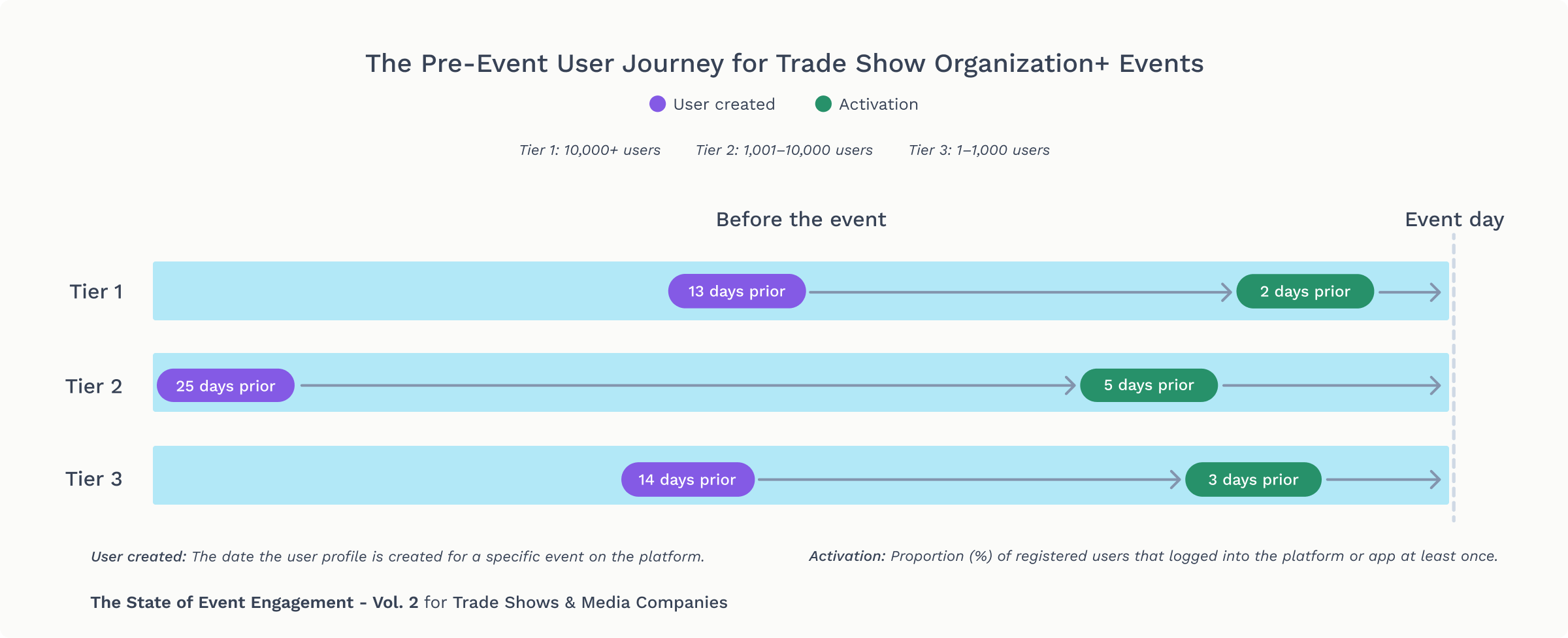
A practical timeline works better. Four weeks out, release the attendee directory, exhibitor profiles, and core agenda. Three weeks out, invite exhibitors to complete profiles, upload offers, and train booth staff on Lead Capture. Two weeks out, push personalized agenda and meeting prompts. During the final week, highlight high-value sessions, Hosted Buyer slots, and sponsored experiences with clear calls to action. The UFI Global Exhibition Barometer continues to show confidence in exhibitions, though confidence does not remove the need for better pre-event activation.
BePositive provides a useful example. GL Events GreenTech+ moved to an app-led, AI-personalized experience with digital badges, early map access, tailored visit routes, meeting recommendations, exhibitor QR codes, webinars, and dedicated support. Attendee app adoption rose from 20% to nearly 100%, exhibitor adoption reached 80%, business meetings increased 3x, and attendee-to-attendee connections doubled. The lesson is not "use an app." The lesson is that the app only matters when the organizer makes it the planning layer before the venue opens.
Segment exhibitors by commercial goal before selling packages
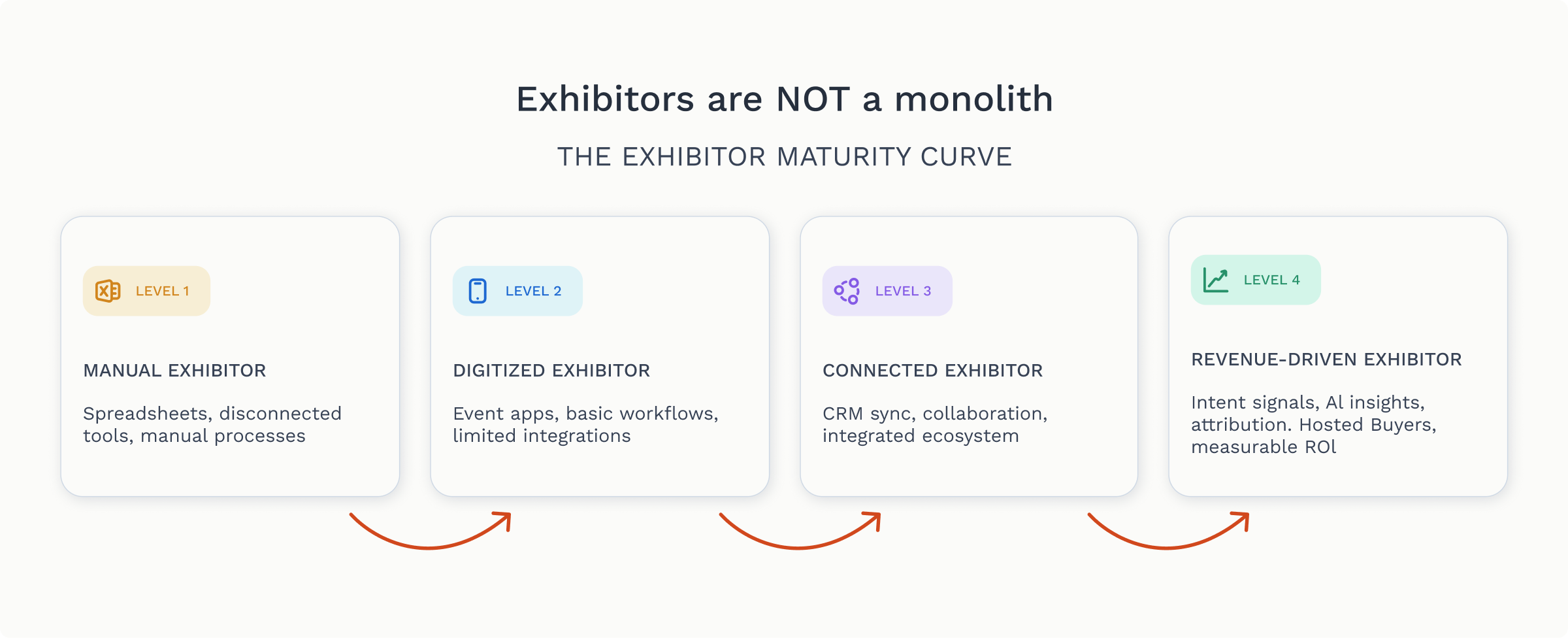
Not every exhibitor wants the same outcome. Some need lead volume, some need senior buyer meetings, some need product demos, and some need brand exposure in a specific category. Treating them all as booth buyers creates a frequent trade show revenue problem: packages are sold by inventory rather than by outcome.
A better segmentation process starts before the prospectus is final. Ask each exhibitor to choose one primary goal and one secondary goal. Then map the package to that goal. Lead-volume exhibitors need badge scanning, booth QR codes, qualification forms, and staff onboarding. High-value account exhibitors need Hosted Buyer meetings, curated profiles, and schedule controls. Brand-awareness sponsors need placements tied to attendee behavior and proof of views, clicks, saves, or session engagement.
A simple decision rule keeps packages honest: if a paid item cannot be returned to the exhibitor within 7 days of the event, it should not be sold as a premium product. That does not mean every sponsorship needs perfect attribution. Some brand placements still carry value, and a category headline sponsor will often pay for share of voice that no dashboard fully captures. That is a real exception. The sharper point is that premium pricing requires premium proof, and proof must be designed into the package before sales begin.
Build Hosted Buyer rules before the calendar fills
Hosted Buyer programs fail when they become manual calendar management. The value is not the free travel or the VIP label. The value is a vetted, intent-matched meeting program where exhibitors pay for access to qualified conversations. If organizers wait until buyer profiles, exhibitor categories, meeting slots, and acceptance rules are already messy, the program becomes a staffing burden.
The operating rule is clear: define buyer eligibility, exhibitor categories, meeting caps, daily limits, and time blocks before accepting participants. If the program has fewer than 50 buyers, manual review can still work. Between 50 and 150 buyers use structured rules and controlled meeting windows. Beyond 150 buyers, manual matching will usually cost more in staff time than it returns in margin unless the platform handles ranked suggestions and schedule controls.
There is a case for human curation. Senior buyers and strategic sponsors often expect careful handling, and some meetings deserve manual review. That exception strengthens the rule. Humans should make judgment calls, not rely on basic matching logic. When the matching layer uses profile data, stated interests, saved sessions, exhibitor categories, and behavior, the operations team can spend time protecting program quality rather than rearranging calendars.
Measure indirect intent as carefully as badge scans
Badge scans are easy to understand, which is why they dominate post-event reporting. Indirect intent is harder, though it often tells the stronger story. Booth bookmarks, profile views, product saves, session attendance, in-app messages, meeting requests, push notification responses, and content downloads all show interest before or after a face-to-face conversation.
Event teams should classify leads into three levels. Direct leads include badge scans, business card scans, and booth QR submissions. Assisted leads include meetings, chat conversations, profile views, document downloads, and product saves. Strategic leads include Hosted Buyer matches, account-level engagement, and multi-person buying committee activity. If an exhibitor receives 40 direct leads and 120 assisted signals, the renewal conversation changes because the event generated more value than the scan count showed.
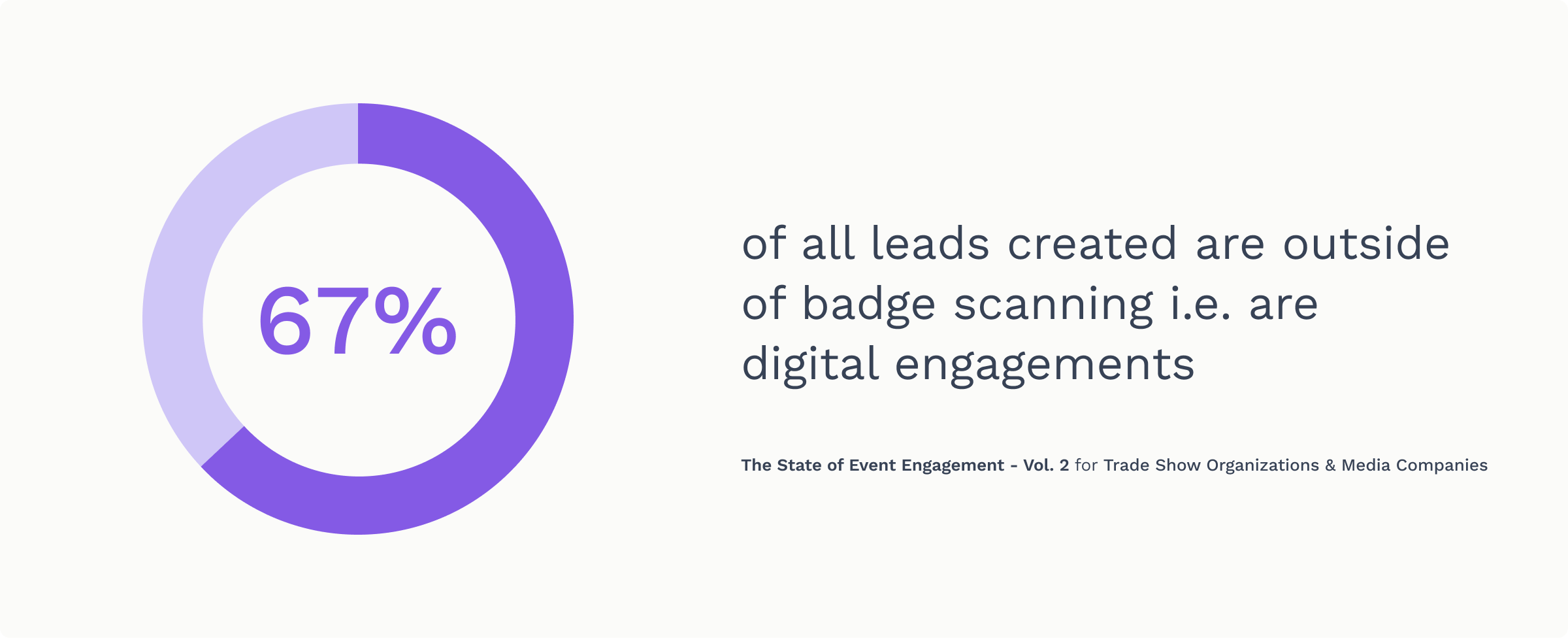
The threshold for reporting should be practical. Give exhibitors a real-time view during the event and a cleaned summary within 7 working days after it ends. If reporting takes more than 2 weeks, the sales team has already lost momentum, and follow-up quality drops. See how Swapcard handles Lead Capture, qualification, and exhibitor reporting, three critical functions that determine whether your current tools can keep up with this pace.
Tie every report to one renewal decision
A post-event report is not useful because it is long. It is useful when it supports a decision: renew, expand, change the package, increase the price, move the booth location, improve matchmaking, or redesign the agenda. Many trade show reports fail because they list activities without naming their commercial implications.
A practical reporting structure starts with the renewal question. For exhibitors, show leads delivered, lead quality, meetings booked, buyer seniority, product engagement, and follow-up readiness. For sponsors, show paid inventory delivered, audience reached, engagement with sponsored assets, and comparison against package promises. For the board, show registration revenue, attendance quality, session behavior, meeting activity, exhibitor lead outcomes, sponsorship spend, and revenue per attendee.
RDV Innov, a GL Events GreenTech+ event, shows why smooth operations and useful reporting go hand in hand. The team needed a bilingual, mobile-friendly platform it could manage without heavy technical support, and the results spoke for themselves:
- 97% active users
- 1,354 contacts
- 450 discussions
- 919 messages
A customer summed it up: "The event ran much more smoothly than in previous years, thanks to Swapcard." The deeper point is that adoption created the data trail. Without adoption, even the most polished report has thin evidence.
How Swapcard connects operations to revenue proof
Swapcard connects event operations to revenue proof by integrating registration, onsite check-in, session activity, meetings, exhibitor leads, and sponsorship engagement into a single event workflow. Instead of forcing organizers to stitch the story after the show, the platform captures signals as attendees, exhibitors, and sponsors move through the event.
Onsite access and engagement data stay connected
Swapcard's registration, tickets, onsite check-in and badging, Access Control, and SwapAccess features are built for trade shows, association annual meetings, and B2B conferences where access rules matter. Organizers can connect ticket type, badge design, QR self check-in, session-level access, and checkpoint scanning, so VIP lounges, paid workshops, Hosted Buyer areas, and expo floor access do not depend on manual judgment at the door.
The commercial value appears after the event. Swapcard analytics can join check-in, session attendance, meeting activity, exhibitor leads, and sponsorship spend into a board-ready view that supports renewal and pricing conversations. That directly addresses the fragmented reporting problem covered earlier, where four tools and a spreadsheet leave organizers without a defensible story.
For large programs, enterprise readiness also matters. Swapcard supports complex event environments with single sign-on (SSO), granular groups and permissions, guest mode for sensitive audiences, and onsite professional services. Those controls matter when different attendee segments, operator teams, and access levels need to be managed without adding more manual work.
Exhibitor value becomes visible before renewal
Swapcard's Exhibitor Lead Center and Lead Capture & Qualification features combine badge scans, business card optical character recognition (OCR), booth QR codes, qualification questions, staff notes, and scoring into one exhibitor-side view. Exhibitors do not have to wait for a static CSV to understand whether conversations were worth pursuing. They can capture, qualify, and export leads while the event is still active.
AI Matchmaking & Recommendations, Smart Meetings & Hosted Buyer, Marketplace, and Items & Booth Sales extend that value beyond scans. Exhibitors can be discovered through branded profiles, products, demos, content, meetings, and behavior-driven recommendations. That is the practical difference between selling a booth and selling access to qualified demand.
The platform is not a customer relationship management (CRM) system, a travel booking tool, or a project management system. It belongs in the event revenue layer, where registration, onsite behavior, engagement, exhibitor activity, and Lead Capture need to work together. Ready to move from scattered data to connected reporting? Get started with Swapcard and customize the walkthrough to focus on the revenue questions your board and exhibitors actually ask.
The revenue proof starts before the doors open
Trade show challenges are not solved by adding more onsite staff or sending another post-event survey. The stronger move is to design the event so registration data, access control, meeting activity, exhibitor engagement, and lead capture build one commercial record from the start.
That shift changes the organizer's role. The job is no longer just about running a smooth show. The job is to prove why exhibitors should renew, why sponsors should expand, and why the next edition deserves a stronger price point. Trade shows that can prove value will keep growing. Trade shows that cannot will keep defending the cost of attendance.


Join 12,000 subscribers and unlock industry secrets.
By submitting this form, you agree to receive periodic emails on insightful content related to events and our product, and in accordance with our Privacy Policy. You can, of course, change your preferences or unsubscribe at any time.

.svg)


.svg)
.svg)
.svg)
.svg)


